
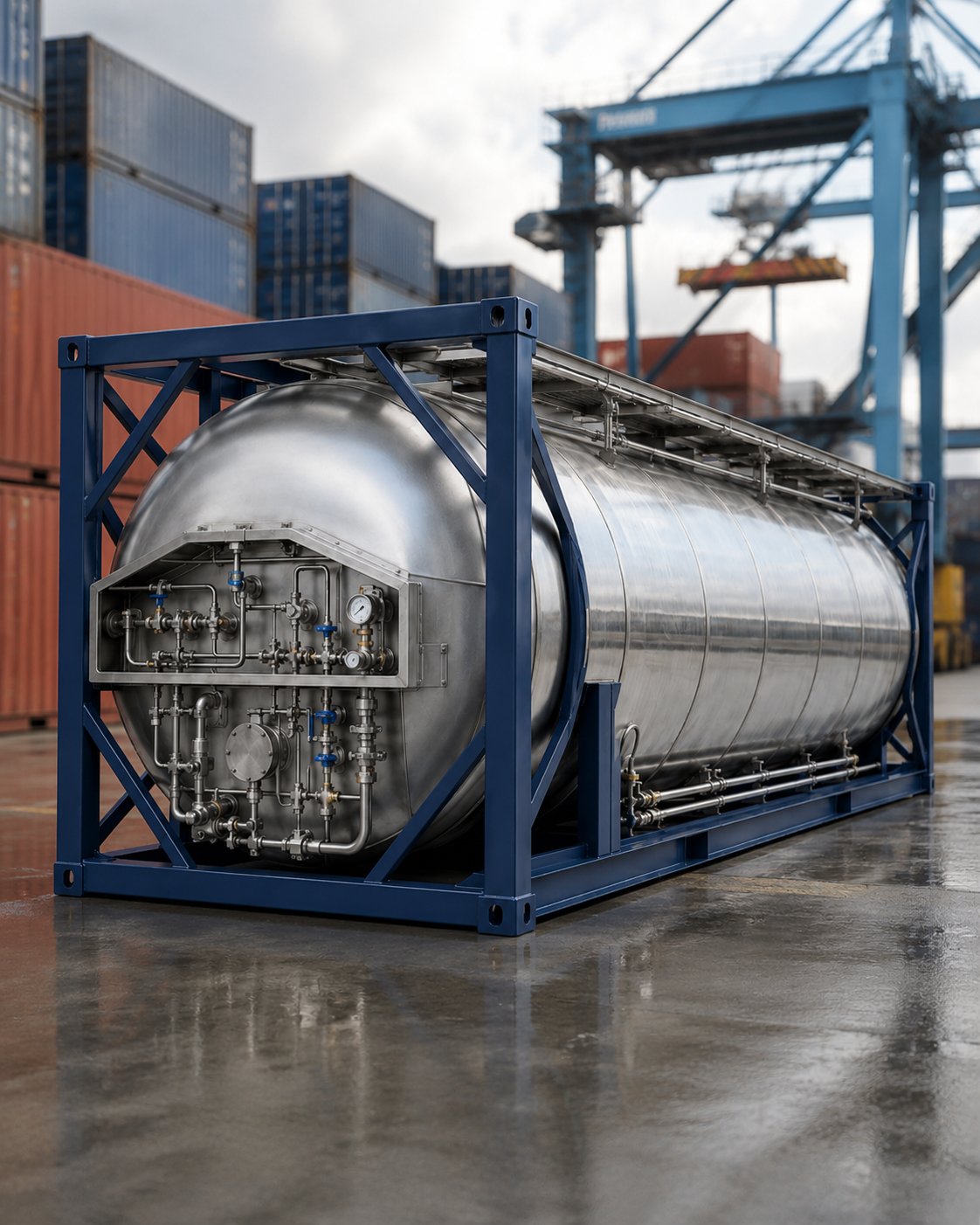
Two buyers can order the same vertical storage tank and receive equipment built to a different design code, carrying a different mark, with a different documentation file behind it. The difference is the destination. This section sets out what each market expects before an order is placed — and which steps stay with the buyer or importer rather than with the supplier.
What the destination country actually decides
A destination is not only a shipping address. It determines which design standard the vessel is calculated and welded to, which legal regime classifies it, which conformity assessment procedure applies, which marking the nameplate carries, whether the equipment or its design must be entered in a register, who inspects it and when, and which technical documentation must exist before production starts. These are seven distinct instruments with different owners, and they are separated one by one in our standards and procedures section.
Because those instruments differ, no single market is treated as the default case here. Each country page below is written around what that market actually does, not around a template with the country name changed.
Markets covered in this section
- Australia — AS 1210 construction, AS 4343 hazard levels, and design and item registration with a state WHS regulator.
- New Zealand — the PECPR certificate chain: design verification at the factory, then a Certificate of Inspection lifecycle held by the controller.
- Europe (EU) — one conformity regime, many national sites: PED and CE at the factory, plus a national operating layer and importer duties.
- United Kingdom — two markings and a written scheme: PER 2016, current CE recognition, UKCA, and PSSR examination in service.
- United States — a code-jurisdiction mosaic: ASME Section VIII construction, state-by-state adoption, National Board registration, and the local AHJ.
- Canada — the registration number decides the schedule: CRN first and province first, with CSA B51 applied provincially.
- Southeast Asia — one region, six separate regimes, each with its own regulator, inspection step and documentation set.
- Middle East and GCC — conformity is completed before the ship sails, under country-specific schemes, with inspection at origin.
- Russia and the EAEU — one EAC document across five countries, behind a technical dossier in Russian, with an EAEU-resident applicant.
- Germany — CE under PED opens the market; AD 2000 documentation, BetrSichV duties and a ZÜS at commissioning govern the installation.
- India — PESO under the SMPV(U) Rules: drawing approval, manufacturer recognition and a storage licence, sequenced before production.
- South Africa — PER and SANS 347 categorisation, with an AIA on the buyer side reading the data book; often the hub for sub-Saharan projects.
- Brazil — NR-13 examines the file, not the factory: the prontuário is constituted from the manufacturer records the vessel ships with.
- Netherlands — CE under PED for market access; the Warenwetbesluit and Dutch greenhouse CO2 demand shape the rest.
- Poland — CE settles market access, UDT settles operation; Polish operators buy around what UDT will accept.
- Turkey — a customs union with the EU makes CE native; TAREKS import checks and Turkish-language files are the local layers.
- Mexico — NOM-020 examines the operator file, not the factory; ASME records and Spanish docs for the nearshoring boom.
- Latin America (Chile, Peru, Colombia) — the Andean copper belt is oxygen-hungry, and altitude reshapes vaporizer sizing.
- Indonesia — Kemnaker K3 riksa uji under Permenaker 37/2016, driven by the world-leading nickel-smelting build-out.
- Vietnam — kiem dinh inspection sets the go-live date; bordering China makes freight and service the easiest anywhere.
- Thailand — Factory Act, DIW and TISI oversight, with food export, automotive and the EEC corridor behind demand.
- Philippines — DOLE OSHS registration, English-language procurement and ISO-frame island logistics.
- Pakistan — pressure vessels are regulated province by province; the inspectorate follows where the tank stands.
- Bangladesh — no single-window pre-approval, so a recognised code plus a complete data book carries compliance.
- Saudi Arabia — SASO conformity through the SABER platform, with ASME design and Vision 2030 projects behind the demand.
- Egypt — the Nafeza ACID file opens before sailing; the Suez Canal Zone, steel and fertilizer drive demand.
- Nigeria — SONCAP conformity before the ship sails; a medical-oxygen build-out and weak grid favour on-site liquid storage.
- Kenya — KEBS PVoC before shipment; the East Africa hub that on-ships to Uganda, Tanzania and Rwanda.
Markets not listed here
This list reflects the markets asked about most often, not the limit of where equipment can be shipped. Other national regimes follow the same logic with different instruments, and a country not yet covered on this site is a question for the enquiry stage rather than an obstacle. Send the destination with the duty and we will set out the applicable pathway.
For LPG cylinder filling-post equipment, start with the LPG cylinder filling supply scope and specify the destination country with the duty.
How the destination shapes factory selection
Cryofor supplies from a network of manufacturers in China rather than from one factory, so the destination regime is an input to the selection itself: the country requirement is established first, and a manufacturer whose current certification and documentation match that requirement is proposed for the order. The full sequence is set out in how we select a manufacturer for your order.
Certificates and approvals belong to a specific factory, production site, model or project — they are not a blanket property of a supplier. Statutory steps in the destination country, such as registration, import notification or in-service inspection, remain with the buyer, importer or owner; Cryofor arranges the supporting manufacturer documentation those steps depend on. Availability and applicability of any standard, certificate, marking or registration procedure are confirmed for the specific manufacturer, model and order before production.