
Southeast Asia’s fragmented pressure-equipment oversight
Southeast Asia is not a single regulatory market for pressure equipment. Singapore, Malaysia, Indonesia, Vietnam, Thailand and the Philippines each administer their own approval process, under their own occupational-safety or factory legislation, on their own timetable. Clearing one country’s process carries no standing in the next.
Cryofortune Engineer & Supply Co., Ltd. sources cryogenic equipment from a network of Chinese manufacturers, coordinated from Foshan. For Southeast Asia the working unit is the destination country, not the region. The factory, the design code and the documentation file are assembled around that country’s gate, not around a generic export package.
Cryogenic tanks, cylinders and vaporizers for Southeast Asia
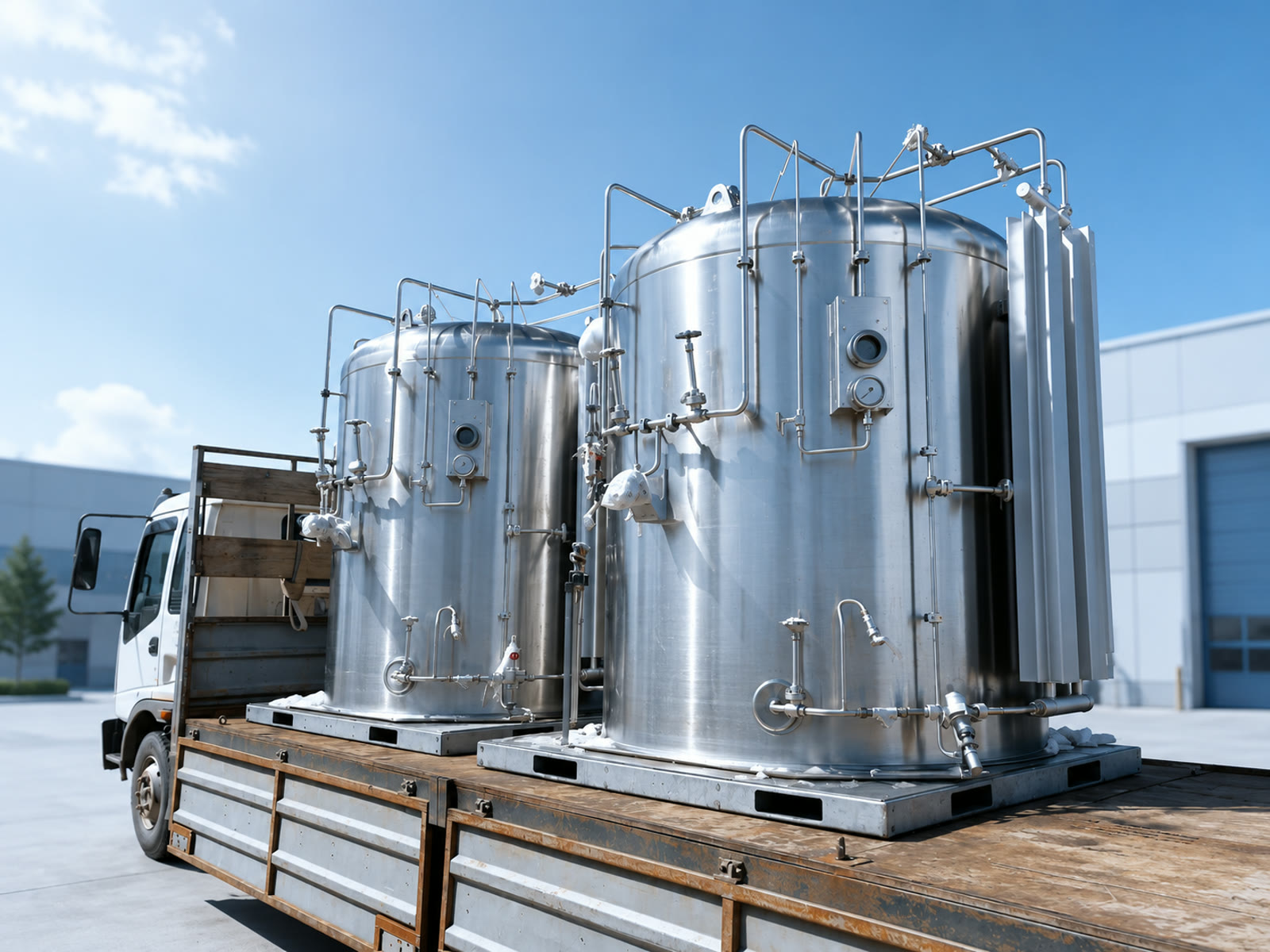
The supply scope covers static storage and distribution equipment for liquid nitrogen, oxygen, argon, carbon dioxide and LNG. Typical configurations include vertical cryogenic storage tanks, vertical liquid cylinders, ambient vaporizers, cylinder filling pumps, laboratory dewars and cryogenic ISO tanks for intra-regional liquid logistics.
Demand in the region tends to follow four applications. Semiconductor and electronics plants in Singapore, Malaysia and Vietnam take bulk nitrogen and argon storage with vaporization. Hospitals across Indonesia, the Philippines and Vietnam take liquid oxygen systems for medical gas supply. Seafood and food processors take liquid nitrogen and CO₂ equipment for freezing lines. Marine and bunkering infrastructure around Singapore takes LNG-service equipment, specified project by project.
The regional pattern: accepted code, national gate
Most Southeast Asian regulators accept ASME Section VIII or EN 13445 as the design basis for imported pressure vessels. That acceptance is a code fact, not a market approval. CE or PED marking, as such, carries no statutory force in the Southeast Asian markets covered here, and a U-stamp is a project decision, not a regional requirement. Every country then adds its own national step — registration, design approval, examination or permit — administered by its own authority. The design code answers how the vessel is built. The national gate answers whether it may operate. The two are separate questions, and the second is never answered by the first.
Country by country: where the gate sits
Singapore: MOM registration and the ISO/IEC 17020 survey
Pressure vessels may require registration with the Ministry of Manpower under the Workplace Safety and Health framework, arranged by the buyer through the Authorised Examiner they appoint (see “What the importer arranges locally” below). For overseas-fabricated vessels, the process may call for a fabrication survey by an inspection body accredited to ISO/IEC 17020, performed at the manufacturing factory. That survey sits inside the production schedule, not after arrival, so it is planned before fabrication starts.
Malaysia: DOSH design approval and the Certificate of Fitness
Design approval from DOSH (JKKP) may be required before an unfired pressure vessel is fabricated, imported or installed. Since 1 June 2024 the Certificate of Fitness regime operates under the amended Occupational Safety and Health Act, following repeal of the Factories and Machinery Act. The certificate is time-limited and renewed through periodic DOSH inspection; the exact sequence is confirmed per project.
Indonesia: riksa uji under Permenaker 37/2016
Pressure vessels and storage tanks fall under Permenaker 37/2016. Initial examination and testing — riksa uji — may be required before commissioning, with periodic examinations thereafter. The work is performed by labor-inspectorate specialists through Disnaker, or by appointed K3 experts working through licensed PJK3 service companies.
Vietnam: kiểm định under Circular 36/2019
Circular 36/2019/TT-BLĐTBXH lists pressure vessels above 0.7 bar, liquefied-gas tanks and gas cylinders among equipment with strict safety requirements. Listed equipment may require technical safety inspection — kiểm định — by a MOLISA-designated organization, an inspection stamp, and declaration to the local labor authority around commissioning.
Thailand: dual oversight under labor and factory law
Oversight runs on two parallel tracks: a 2021 ministerial regulation under labor-safety law, and a 2006 regulation under the Factory Act administered through the Ministry of Industry. One or both may apply, depending on where and how the vessel is installed. Periodic inspection by registered engineers may be required at defined intervals.
Philippines: DOLE Rule 1170 and the Permit to Operate
Unfired pressure vessels are covered by Rule 1170 of the DOLE Occupational Safety and Health Standards. A Permit to Operate may be required, typically valid for one year and renewed through inspection by the DOLE Regional Office.
The timing is the practical difference. Malaysia and Singapore may intervene before or during fabrication in China; Indonesia, Vietnam, Thailand and the Philippines gate mainly at commissioning and periodic re-inspection. The first pattern shapes the production plan. The second shapes the handover file.
Tropical ambient: what the climate does to sizing
Equatorial ambient temperatures work in favor of vaporizer duty; equatorial humidity works against it. Frost accumulates faster on finned surfaces in humid air, and an undersized bank loses capacity exactly when draw is continuous. Vaporizers for Singapore, Malaysia or Indonesia are therefore sized on icing-derated capacity, not on catalog nameplate figures. Duplex banks with switchover, or extended defrost allowances, can be configured where the draw profile requires them.
How the manufacturer is selected
The network is not interchangeable, and the destination country narrows it. Selection criteria for a Southeast Asian order include a documented export record to that specific country, fabrication to the agreed design code, and willingness to host third-party shop inspection during production. The last point matters most where the gate sits at the factory, as it may in Singapore and Malaysia. Documentation discipline — traceable materials, complete weld records, consistent data reports — weighs more than price position. The vetting approach is described in our guide to vetting Chinese cryogenic suppliers.
Inside the documentation file
Depending on the manufacturer and order, the file can include construction drawings with welding details, design calculations to the agreed code, material certificates, pressure-test and vacuum-retention records, manufacturer data reports, and third-party inspection reports where a survey is commissioned. The document scope is agreed before production, because several regulators in the region examine the fabrication record, not only the finished vessel. Background on export documentation is collected in the export certification guide; ISO-tank specifics are covered in the 20ft ISO tank container guide.
What the importer arranges locally
Statutory acts in the destination country sit with the owner or importer, not with the supplier. Depending on the country, these may include appointment of an Authorised Examiner and MOM registration in Singapore, DOSH design approval and Certificate of Fitness in Malaysia, riksa uji in Indonesia, kiểm định and labor-authority declaration in Vietnam, engineer inspections in Thailand, and the DOLE Permit to Operate in the Philippines. Import permits and duties follow each country’s customs regime and may apply separately. Cryofortune prepares the equipment and the file those steps consume; it does not perform the statutory act itself. Where a local step is unclear, it is identified before the order, not discovered at commissioning.
Verified before your equipment is built
Availability and applicability of any standard, certificate, marking or registration procedure are confirmed for the specific manufacturer, model and order before production. Regulatory references on this page describe the general pattern as of mid-2026 and are verified against the national regulator for each shipment. An overview of design standards we work to is maintained on the standards page.
To begin, send the destination country, the medium, the required capacity and working pressure, and the intended installation site. We return a configuration proposal, a candidate manufacturer profile, and the document scope matched to your country’s gate. Guidance on capacity steps is available in microbulk versus cylinders and the storage tank price guide.