The Netherlands handles cryogenic equipment through two layers of rules, and it pays to keep them apart from the first enquiry. How a storage tank or vaporizer reaches the market is a European question: conformity assessment under the Pressure Equipment Directive, CE marking, an EU declaration of conformity issued by the manufacturer. What happens once the equipment is installed is a Dutch question, governed by the national decree that implements the directive and the inspection regime built around it. A supplier can settle the first layer completely before the ship leaves China; the second belongs to the Dutch operator and the bodies that serve them — and a good supplier prepares the paperwork those bodies will want to see.
Cryofortune Engineer & Supply Co., Ltd. is an international sourcing and engineering supplier, not a factory. We source cryogenic and industrial gas equipment from a network of vetted Chinese manufacturers, match each order to a factory whose certification genuinely covers it, and manage design review, production oversight and documentation through to shipment. Certificates always belong to a specific manufacturer, model and order — never to our brand. This page covers the Dutch market in particular; the wider regulatory picture is in our Europe guide, and other markets are indexed by country.
Equipment We Supply to Dutch Buyers
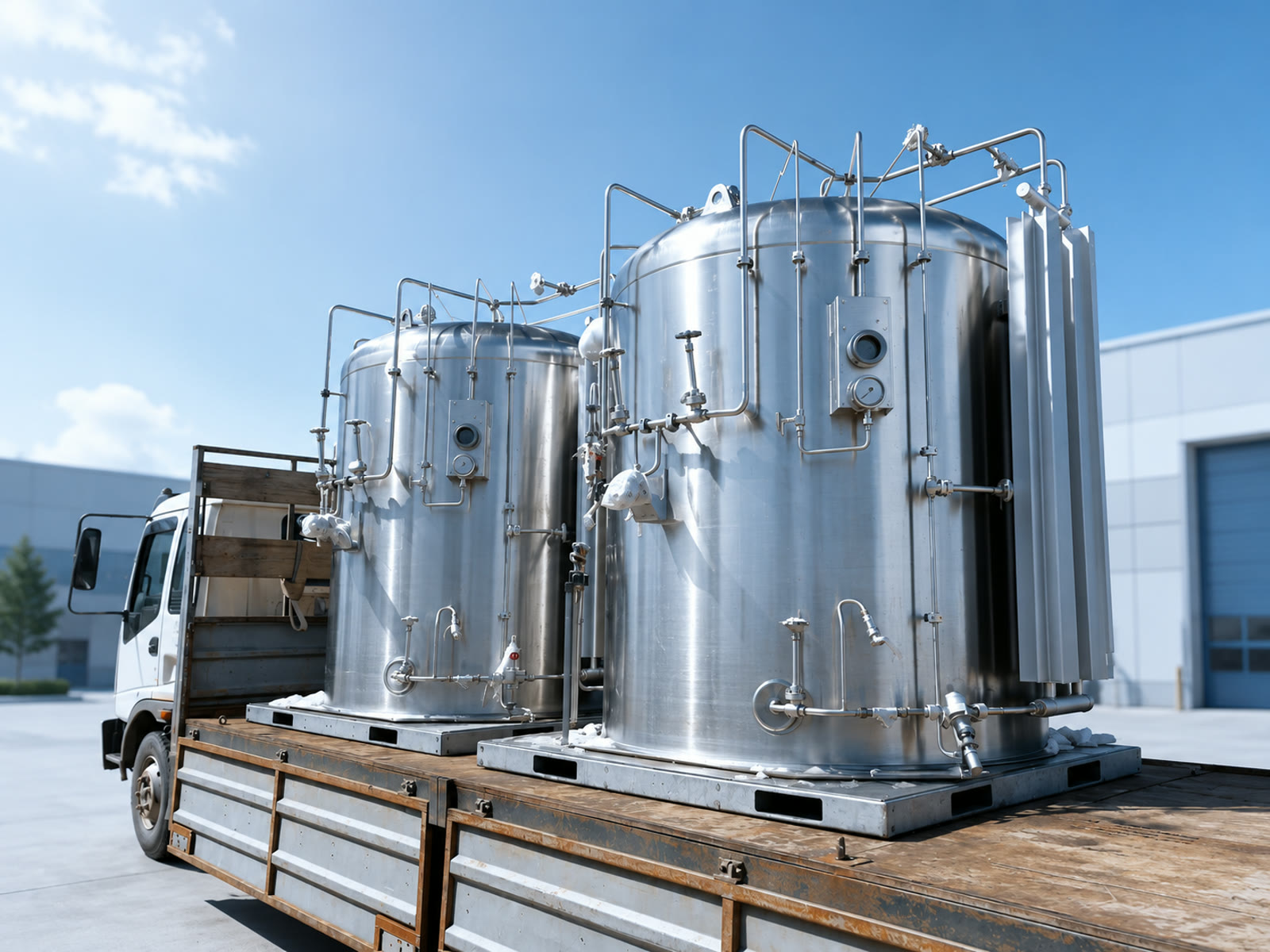
Dutch demand is unusually varied for a market this size. Greenhouse horticulture consumes carbon dioxide at a scale unusual even by European standards — a subject that gets its own section below. Beyond the glasshouses: food processing and cold-chain logistics built around one of Europe’s densest distribution networks; breweries and beverage producers running on CO2 for carbonation and blanketing; metal fabrication shops cutting on oxygen and nitrogen and welding on argon mixtures; laboratories, universities and hospitals holding liquid nitrogen and bulk medical oxygen. All of it draws on the same family of equipment:
- Cryogenic storage tanks for liquid oxygen, nitrogen, argon and CO2, vertical or horizontal, sized to the site;
- Cryogenic vaporizers — ambient air, water bath or electric — turning stored liquid into process gas;
- Cryogenic liquid cylinders for users whose volumes do not justify a fixed tank;
- Pressure vessels and buffer tanks for gas-side storage;
- Liquid CO2 equipment — storage, vaporization and heating for carbon dioxide service.
Capacities, working pressures and materials are set per project specification rather than from a fixed catalogue, and the factory is chosen after the specification is clear — not before.
The EU Layer: PED Conformity Settled at the Factory
Stationary pressure equipment placed on the Dutch market is assessed under PED 2014/68/EU. The equipment’s category — a function of medium, pressure and volume — determines the conformity module, and a notified body is involved to the degree the category requires. The manufacturer completes the assessment, affixes the CE marking and issues the EU declaration of conformity before shipment. That is why the real compliance decision is made when the factory is selected, not when the container reaches Rotterdam: conformity is manufactured into the unit, not added at the border.
Transportable receptacles — cryogenic liquid cylinders and other cylinders moved between sites under transport rules — fall outside PED. They are assessed under the Transportable Pressure Equipment Directive, TPED 2010/35/EU, and carry the Pi marking instead of CE. An enquiry that mixes a fixed tank with a fleet of cylinders is therefore two separate conformity exercises, and we quote it that way.
The Dutch Layer: Warenwetbesluit Drukapparatuur 2016
In the Netherlands, PED is implemented through the Warenwetbesluit drukapparatuur 2016 — the Commodities Act Decree on pressure equipment. On the market-access side the decree mirrors the directive: equipment carrying valid CE marking and documentation under PED meets the Dutch requirement for placing on the market. The same decree also frames what happens in service. Commissioning and periodic in-service inspection duties for larger pressure installations involve Dutch conformity-assessment and inspection bodies designated under the decree; which installations are in scope, which body acts and on what basis follow from current Dutch rules and the installation’s classification, and are settled between the operator and their chosen body. Those statutory steps are performed in the Netherlands by the buyer, importer or their local representative — never by us from China. What we contribute is the manufacturer’s file that the Dutch process draws on: the declaration, certificates, drawings and test records described further down.
The Rotterdam Position: Buying for the Netherlands, Selling to the EU
The Netherlands is the EU’s main entry port — Rotterdam for deep-sea containers, Schiphol for urgent air freight — and Dutch trade has organized itself around that fact. A large share of Dutch buyers of capital equipment are not end users at all: they are distributors and traders who import once and place equipment across the EU. That model fits ours well, with one clear allocation of duties. Under EU law, the importer of record carries the importer’s obligations — verifying that conformity assessment was carried out and the technical documentation drawn up, and identifying themselves on or with the equipment as the rules require. Customs clearance at Rotterdam or Schiphol is handled by the buyer’s broker, which is standard capital-equipment practice; we prepare the commercial and shipping documents to match, with incoterms agreed per order.
One practical point is worth stating plainly: Dutch business runs comfortably in English. Specifications, contracts, design reviews and factory documentation can move between a Dutch buyer and our engineers without a translation layer, which makes the Netherlands one of the smoother European markets for a China-sourcing model.
CO2 for Dutch Greenhouses
Dutch glasshouse horticulture doses CO2 into the growing climate as a routine yield tool, and it does so at industrial scale. The dosing networks and climate control inside the greenhouse are a domestic specialist trade; our part is the supply side that feeds them. That means bulk liquid CO2 storage tanks holding the delivered product, vaporizers and CO2 heaters that bring stored liquid to the temperature and pressure the dosing system needs, and gas-side buffer vessels in between. The equipment line is described under liquid CO2 equipment, and the supply-side architecture — what sits between the tanker delivery and the dosing pipe — in our article on greenhouse CO2 enrichment supply.
Buyers on this side of the fence are often gas distributors and greenhouse-installation firms rather than growers directly, which again fits the Dutch trading pattern. The specification of the CO2 itself is a matter between grower and gas supplier; our equipment is specified to the medium, duty and standards confirmed for the order.
Which Factory Builds a Dutch Order
Not every manufacturer in our network is a candidate for a PED market. For the Netherlands we shortlist factories holding current PED module certification covering the equipment type and category in question, with a working notified-body relationship and a documented history of EU orders. We verify that the certificate belongs to that manufacturer, that scope and that production site — certification is never treated as transferable between factories, and never presented as ours. The full method, including what we check on site and in the weld shop, is described in how Cryofortune selects a manufacturer.
The Documentation Package
A Dutch order typically ships with the following as the standard scope — the final list is confirmed per order and per the conformity module applied:
- EU declaration of conformity for the specific unit;
- CE marking and data on the nameplate;
- Notified-body certificates for the module applied;
- EN 10204 3.1 material certificates for pressure-bearing parts;
- Weld documentation and NDT records;
- Pressure and leak test reports for the unit;
- Operating manual in Dutch or English, per the buyer’s instruction.
Distributors placing equipment onward into other EU markets can tell us the destination profile at the enquiry stage — manual languages and documentation copies are far easier to arrange before production than after.
Starting an Enquiry
The useful first message is short: the medium (oxygen, nitrogen, argon or CO2), the volume range you have in mind, the working pressure, the site — or the market, if you are a distributor — and whether the equipment is for your own operation or for placement with an end user. Send it through the contact page and we come back with the questions that matter for the specification, and a realistic picture of lead time and logistics to Rotterdam.
Availability and applicability of any standard, certificate, marking or registration procedure are confirmed for the specific manufacturer, model and order before production.