Every cryogenic tank that enters Mexico is judged twice. Once at customs, briefly, as ordinary capital equipment. And then, for the rest of its working life, under NOM-020-STPS-2011 — the Mexican official standard for pressure vessels in workplaces — which never inspects the foreign factory at all. It examines the operator’s file. A vessel that arrives with complete design and fabrication records can be classified, filed and kept in service by the plant that runs it. A vessel that arrives with a nameplate and a thin folder becomes the operator’s problem at the first review, years after the supplier was paid and forgot the order.
That is the lens through which Cryofortune Engineer & Supply Co., Ltd. supplies the Mexican market. We are an international sourcing and engineering supplier, not a factory. We source cryogenic and gas equipment from a network of vetted Chinese manufacturers, match the manufacturer and model to the documentation regime of the destination country, and manage engineering review, inspection and export so that the equipment ships together with the records its future file will need.
Equipment we supply to Mexico
Each equipment class below is sourced against the project’s specification — medium, capacity, working pressure, discharge rate — from manufacturers in our network whose documentation practice fits a file-driven market:
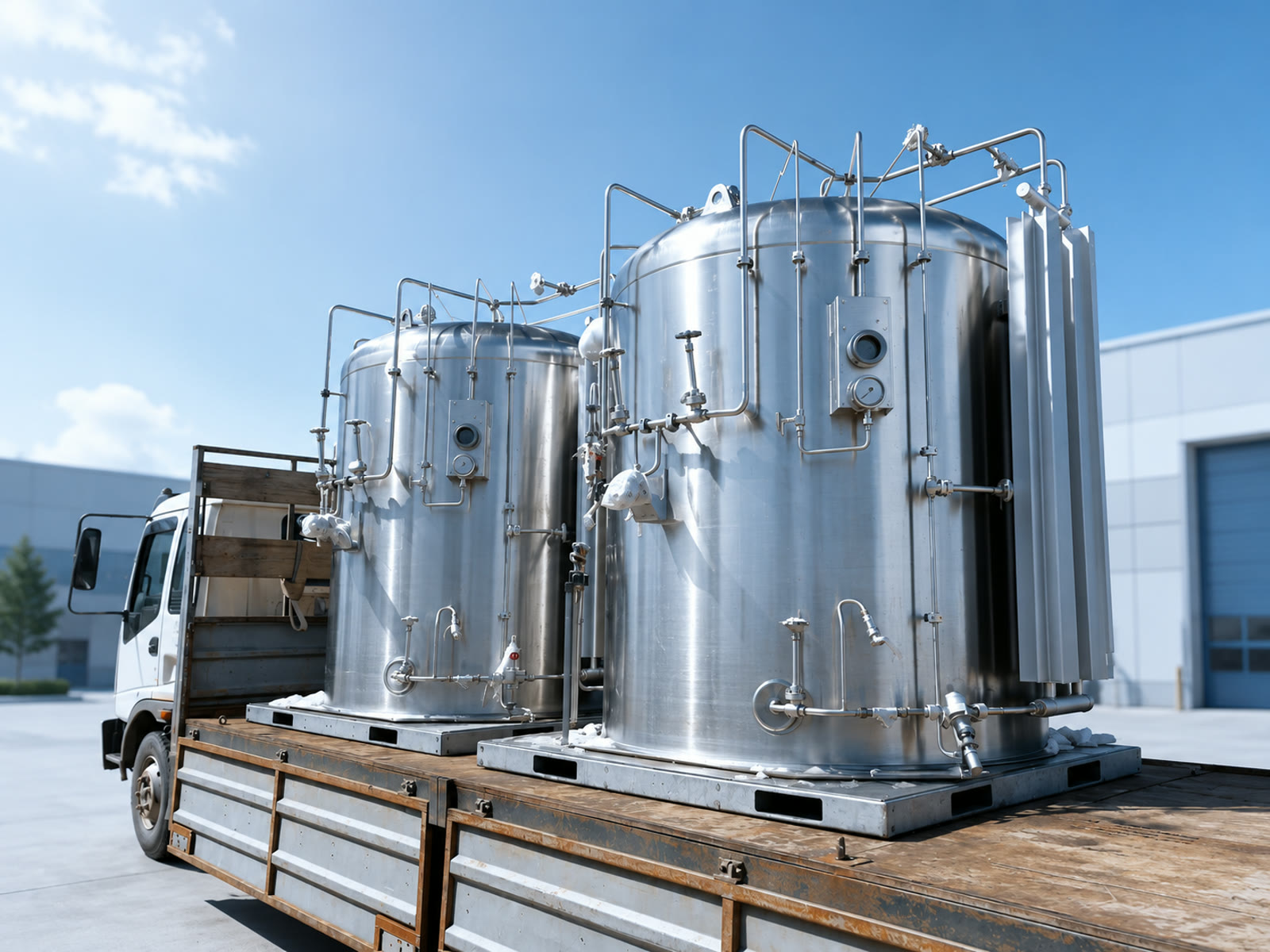
- Cryogenic storage tanks — vacuum-insulated vessels for liquid oxygen, nitrogen, argon and carbon dioxide, from plant-fence storage at manufacturing sites to bulk installations at gas distributors and hospitals.
- Cryogenic vaporizers — ambient-air and heated units that turn stored liquid into process gas at the rates a welding line, freezing tunnel or pipeline network actually draws.
- Cryogenic liquid cylinders — portable vacuum-insulated cylinders for users whose volumes do not yet justify a fixed tank, and for distributor fleets serving them.
- Industrial pressure vessels — air receivers, buffer vessels and process tanks engineered to the design code the buyer specifies.
- Liquid CO2 equipment — CO2 storage tanks and related equipment for beverage plants, food processors and industrial CO2 users.
NOM-020-STPS-2011: a standard that examines files, not factories
NOM-020-STPS-2011 is issued under Mexico’s labour-safety framework and administered through the labour authority, the Secretaría del Trabajo y Previsión Social (STPS). Its subject is the safe operation of pressure vessels, cryogenic vessels and steam generators — “recipientes sujetos a presión” — in workplaces. Two features define how it touches imported equipment:
- It is an operation standard, not an import approval. The obligated party is the employer that operates the equipment in Mexico — not the fabricator, not the exporter. There is no NOM-020 “certificate” that a foreign factory can hold, and any supplier claiming one should be read carefully.
- It works through classification and records. Equipment is classified into categories according to parameters set out in the current text of the standard, and the category drives the operator’s obligations — from maintaining an equipment file, to filing notices with the labour authority for higher categories, to keeping safety devices and periodic reviews in order.
The equipment file is where an imported vessel performs or fails. The operator is expected to hold, for each vessel, records covering its design and fabrication, its safety and pressure-relief devices, its test history and its operating conditions. Like Brazil’s NR-13, the regime audits paper: nobody from STPS will ever visit the manufacturer, but the file built from that manufacturer’s records will be examined in Mexico. The steel is rarely the problem; the file is — and the file can only contain what the vessel arrived with.
Category thresholds, notice procedures and review regimes are category-dependent and follow the current text of the standard and the practice of the authority; nothing here substitutes for the operator’s own compliance work. What a supplier controls is upstream, and that is the part we take seriously: the vessel leaves the factory with fabrication records complete, consistent with the nameplate, and scoped before production against what the buyer’s side says its file must contain — confirmed per order, not assumed.
Design codes and the language of the file
ASME Boiler and Pressure Vessel Code Section VIII is the natural design language of the Mexican pressure-equipment market. Proximity to United States engineering practice, the specifications of USMCA-zone manufacturers, and the expectations of insurers and EPC contractors all point the same way, and an ASME design basis gives the operator’s engineers and the labour authority a framework they already know how to read. We source vessels designed and documented to ASME Section VIII as the default for Mexican projects, with U-stamp certification where the buyer’s specification or end client requires it. An ASME certification belongs to a specific manufacturer, its certified scope and the specific order — never to a brand, ours included — so stamp availability is confirmed for the actual factory and model before production.
The operator’s file lives in Spanish. Manufacturer records are typically issued in English, and we arrange Spanish translation of the agreed documentation package per order — scoped before production, so that the operator’s side is not reconstructing or translating records under time pressure after the equipment is already on its foundations.
Who does what: our position and the importer’s
We supply as the exporter. The buyer — or the buyer’s Mexican representative — acts as importer of record and operator-side principal. The statutory steps in Mexico belong to that side: NOM-020 classification and the equipment file, notices to the labour authority where the category requires them, and any other federal, state or municipal permissions that apply to the site. We do not perform Mexican statutory procedures, and we are careful never to imply otherwise. What we do is arrange, from the manufacturer, the documentation those procedures consume — and agree its scope in writing before fabrication starts.
Customs is the ordinary kind. Cryogenic and gas equipment clears as standard capital equipment, handled by the buyer’s customs broker; tariff classification and the resulting duties and taxes follow from the broker’s classification of the specific goods. We support the clearance with commercial documents, packing data and technical descriptions in the form the broker asks for.
Where Mexican demand comes from
The nearshoring wave under USMCA is the structural story. Automotive plants and their supplier parks, electronics assembly, and appliance manufacturing have all been expanding Mexican capacity, and every one of those plants consumes industrial gas — argon and nitrogen for welding, laser cutting and processing lines above all. Each new plant or expanded line ultimately means storage tanks and vaporizers at the fence, sized to the draw of the equipment inside.
The beverage sector is the other pillar, and it is world-scale: Mexico is one of the largest beer-exporting countries on earth, and its soft-drink bottling industry ranks with the biggest anywhere. Breweries and bottlers are steady, volume consumers of CO2 for carbonation and process use, which keeps demand firm for liquid CO2 storage and handling equipment — a segment we cover in detail in our guide to CO2 in beverage carbonation and brewing. Around these two pillars sit food freezing with nitrogen, medical oxygen systems for hospitals, and the independent gas distributors that serve all of the above with bulk tanks and cylinder fleets.
How we select the factory behind a Mexican order
Because certificates belong to a specific manufacturer, model and order — never to a brand — factory selection is where a Mexican project is really won. Our selection process is described in full in how Cryofortune selects a manufacturer; for Mexico the filters that matter most are:
- ASME certification that is genuine, current and in scope for the vessel in question — verified with the issuing body, not taken from a brochure.
- A real export track record to documentation-heavy markets, where the factory has already produced the kind of data package a file-based regime consumes.
- Fabrication-data discipline: material traceability, weld and test records that match the physical vessel and its nameplate without reconciliation.
- Acceptance of third-party inspection during and after fabrication, on our appointment or the buyer’s.
Documents that travel with the equipment
The documentation package is defined per order, against the buyer’s stated file requirements, before production begins. Typically it draws on design drawings and calculations, material certificates, welding and non-destructive-examination records, pressure-test reports, safety-device documentation and the manufacturer’s data book, with nameplate data consistent throughout — the categories described in our overview of export certification and documentation for cryogenic equipment. Spanish translation of the agreed package is arranged as part of the same scope. What we do not do is promise a generic “certificate for Mexico”: the package is specific to the manufacturer, the model and the order, which is exactly what makes it usable.
Start a Mexican project
If you are specifying equipment for a site in Mexico — as the operator or as a distributor — send us the medium, the capacity, the working pressure and the state or city of installation, and tell us which side of the file you sit on. We will come back with candidate manufacturers, an equipment proposal and a documentation scope to react to. Reach us through the contact page, and see our other market pages at cryogenic equipment by country.
Availability and applicability of any standard, certificate, marking or registration procedure are confirmed for the specific manufacturer, model and order before production.