
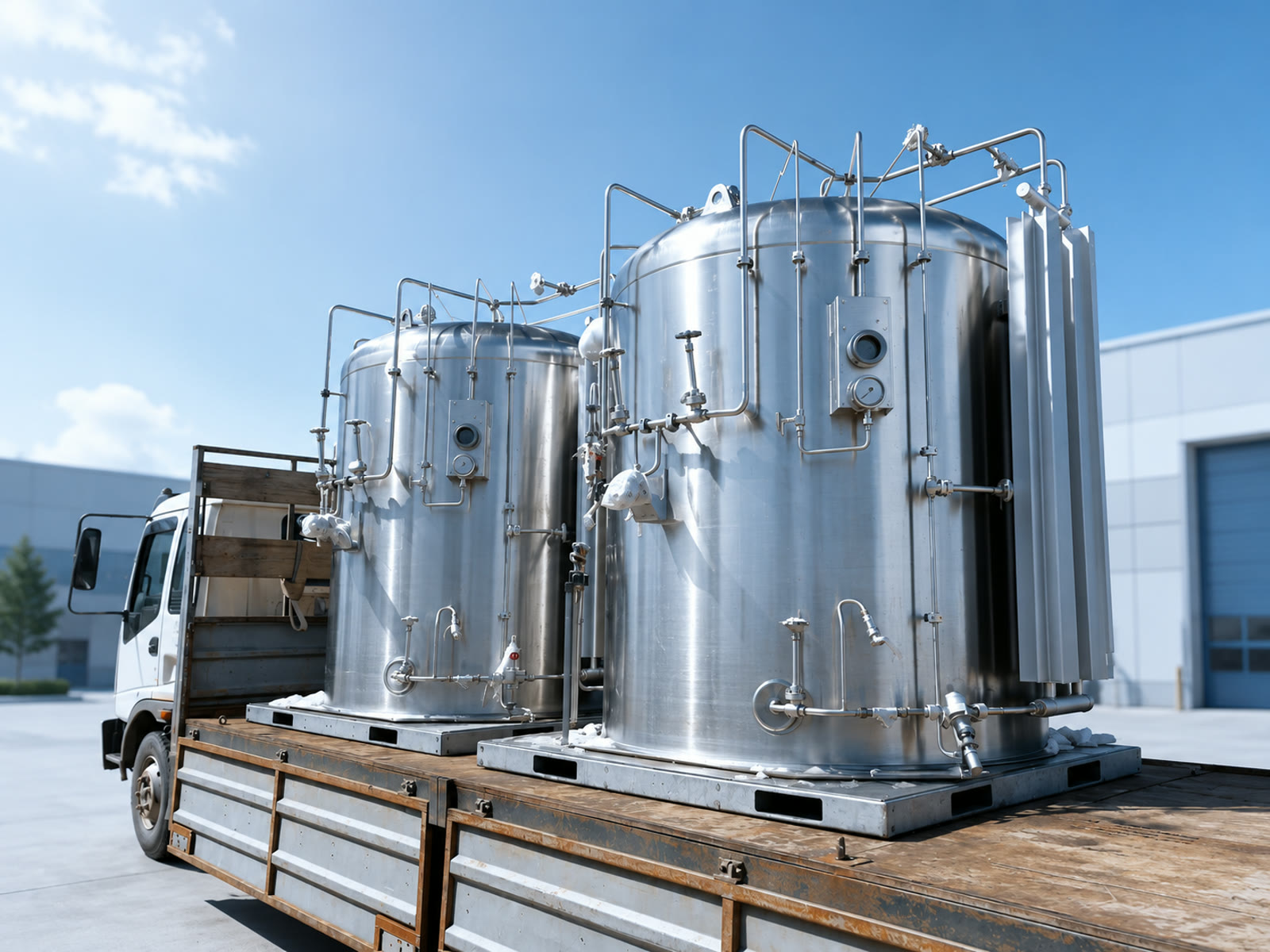
Conformity happens before the ship sails
Middle East markets decide market access at origin, not at the port of discharge. Certificates of conformity are issued against factory documentation, and inspections are witnessed at the manufacturer before dispatch. That origin-side sequence sets the entire supply process for a Cryofortune Engineer & Supply Co., Ltd. order into this region: a candidate manufacturer must be open to third-party inspection before it is considered at all, since certificates of conformity, witness testing and pre-shipment inspection are commonly executed by international inspection bodies on the factory floor rather than at the border. A shop that cannot host these steps is not shortlisted for the Middle East, whatever its pricing.
No GCC state operates a horizontal pressure equipment law of the European type. Import control is program-based: each country maintains its own conformity scheme, its own regulated-product list and its own accepted certification bodies. Whether a cryogenic vessel needs a third-party certificate, a self-declaration or neither depends on the destination country and the HS classification of the specific product — and, as the programs below show, several of these lists are moving targets rather than fixed reference points.
SABER, ECAS, KUCAS: which GCC conformity route applies
- Saudi Arabia. Imports are processed through the SABER platform operated under SASO. Regulated products may require a product certificate of conformity plus a per-shipment certificate from an accepted body; many industrial cryogenic vessels can instead travel the self-declaration route, since liquefied-gas vessels sit outside product-specific regimes such as the technical regulation for simple pressure vessels, which is limited to welded vessels holding air or nitrogen, not liquefied gas. The wider pressure-equipment regime is being restructured, so classification is re-checked against SABER’s current product list and the shipment’s HS code before each order. Where SABER requires a certificate, factory documentation is prepared to support the application through an accepted body.
- United Arab Emirates (UAE). The applicable ECAS requirements are confirmed against the current regulated-products list for the specific product and HS code at enquiry stage. LPG cylinders are confirmed as a separately regulated category regardless.
- Kuwait. The KUCAS scheme, administered by PAI, can require a product-level technical evaluation and a per-consignment inspection report before customs clearance. Its published regulated-product groups center on electrical, gas-appliance and consumer goods; a specific industrial vessel is checked against the current list rather than assumed exempt.
- Qatar. Third-party certificates of conformity apply to a regulated list centered on vehicle parts, electrical products and food. Plant equipment commonly enters under project documentation rather than the certificate list, confirmed against Qatar’s current list at enquiry stage.
- Oman. The Omani Quality Mark (OQM), administered by the Directorate General for Standards and Metrology, became mandatory from March 2026 for an expanding list of categories that already includes gas appliances and pumps. Because the equipment scope below includes cylinder filling pumps, any Oman-bound order is checked against Oman’s current mandatory list before the design basis is fixed, rather than defaulted to a declaration-based route.
- Bahrain. Entry is generally accepted on a manufacturer’s declaration of conformity with supporting test reports, subject to the current controlled-goods list administered under MOIC/BSMD — checked per order rather than paired with Oman under one assumption.
One misconception is worth removing early. The Gulf conformity mark, issued under the GCC Standardization Organization (GSO), does not currently cover pressure or cryogenic equipment, so a G-Mark is neither available nor required for these products.
ASME Section VIII by contract, not by import law
The working pressure vessel code across Saudi Arabia, the UAE and the wider Middle East is ASME Section VIII, usually with U-stamp. It is imposed through purchase orders and buyer specifications, not through import statute — the inverse of Europe, where PED 2014/68/EU is law and the code choice follows from it; the comparison is drawn on our Europe page.
Vessels designed to EN 13445 or related European cryogenic standards can be accepted where the buyer’s specification permits equivalents. That acceptance is commercial, not statutory, and is confirmed with the buyer before the design basis is fixed. Our standards reference outlines the main code families.
EPC and end-user specifications above the code
In Middle East oil, gas and petrochemical procurement, a second layer sits above the design code. National energy companies and EPC contractors publish their own engineering specifications, which supplement ASME requirements and add approved-vendor qualification steps.
These documents are contractual instruments, not import law, and they can govern materials, testing scope and documentation format in detail. Vendor registration with such end users may take months and may include a factory assessment. We treat the buyer’s specification as a design input at enquiry stage, not a discovery at final inspection; where an order references an end-user specification, it is reviewed against the candidate factory before quotation.
Factory selection and the document package
Inspection access at origin is the decisive filter, established above. Beyond that, selection weighs code capability — including ASME shop qualification where the order requires it — documentation discipline, and demonstrated export history to the destination country; the method is described in our supplier vetting guide.
Depending on the manufacturer and order, the resulting documentation package can include material certificates, weld and NDT records, pressure test reports, data books and design code certification, alongside the country-specific application support noted above. Third-party pre-shipment inspection reports can be arranged against the buyer’s inspection and test plan. The general framework is set out in our export certification guide and, for transport tanks, the ISO tank container guide.
Equipment for Middle East and Gulf destinations
The supply scope for Middle East destinations covers static storage, portable vessels, pressure-building and gasification equipment, and transport tanks:
- Vertical cryogenic storage tanks for LOX, LIN, LAr and LCO₂ bulk installations
- Vertical and horizontal cryogenic cylinders for microbulk and distribution duty
- Ambient-air vaporizers and CO₂ heaters for gasification stations
- Cryogenic ISO tanks and 20 ft tank containers for regional and marine transport
- Filling pumps and related gas filling systems — checked against Oman’s OQM pump category where relevant
- Liquid nitrogen dewars, high-pressure gas cylinders and dry ice pelletizers
Configuration by medium is described on the liquid oxygen, liquid nitrogen, liquid CO₂ and LNG pages.
For LPG, cylinders are filled by weight at a filling post, where an electronic filling scale stops each fill at a preset mass; that filling-post equipment is covered on the LPG cylinder filling page.
Engineering for high ambient temperature
Gulf ambient conditions change some assumptions rather than the equipment itself. High air temperatures assist ambient-air vaporizers, so duty cycles and bank sizing can often be configured more leanly than in cold climates; this is confirmed per site profile. Working against that, solar load and elevated ambient raise heat leak into storage vessels, so boil-off expectations and relief device sizing are reviewed against site conditions rather than taken from temperate-climate defaults. Shading, coating color and valve enclosure ventilation can be specified where the installation warrants it.
Industries: oil and gas, hospitals, food and beverage, LNG
Typical Middle East applications fall into a few recognizable groups. Oil, gas and petrochemical sites take nitrogen and utility service tanks under EPC or end-user specifications. Hospitals take bulk liquid oxygen installations; equipment intended for medical oxygen service may face health-authority registration requirements in addition to industrial conformity, and this track is identified at enquiry stage. Food and beverage plants take CO₂ and nitrogen storage with food-grade documentation where required. LNG projects procure through EPC vendor lists rather than open tender; smaller LIN and LOX utility vessels around such projects follow ordinary channels. The microbulk versus cylinders guide covers sizing thresholds for distributors and smaller users.
Registrations and permits: the buyer’s side of the file
Some steps belong to the importer or operator and cannot be performed by the supplier. SABER, ECAS, KUCAS and OQM registrations and import certificate applications are filed in-country by the importer of record. Installation and operation approvals, such as civil defence or municipal permits for gas installations, may be required and vary by emirate or municipality. Medical oxygen service can add health-authority registration on the buyer’s side, as noted above. We prepare the factory documentation these procedures draw on; the statutory filings themselves remain the buyer’s act. Planning references for site works are collected in the CO₂ filling station setup guide.
GCC lists change; confirm before each order
The availability and applicability of any standard, certificate, marking or registration procedure are confirmed for the specific manufacturer, model and order before production. SABER’s product list is re-versioned, ECAS and KUCAS categories are updated, and Oman’s OQM rollout is still expanding — so confirmation is repeated at contract time for Middle East orders rather than assumed from a previous shipment.
To begin, send the destination country, gas service, capacity and working pressure, and any end-user specification the order must satisfy. We return a proposed configuration, the applicable conformity route and a document plan. Budget context is available in the storage tank price guide; regional pages for the USA and Australia show how the same method adapts to other regimes.