A cryogenic installation is only as reliable as its smallest components. Valves, relief devices, regulators, gauges and hoses determine how a vessel fills, holds pressure and delivers product. Cryofortune does not list these items as standalone catalog products. They are specified and supplied as part of each configured equipment package — matched to the vessel, the media and the destination country. This page describes what that scope of supply typically includes and how the components are selected.
What a cryogenic valve and accessory package typically includes
The exact list depends on the vessel or system being ordered. Across the range, the following families appear most often.
- Cryogenic globe and isolation valves — extended-bonnet shut-off valves on liquid fill, withdrawal and pressure-building lines.
- Check valves — non-return protection on fill connections and pump discharge lines.
- Safety relief devices — relief valves and bursting discs sized for the vessel and its working pressure.
- Regulators and pressure-building circuits — components that hold delivery pressure steady as liquid is drawn off.
- Gauges and level instruments — pressure gauges and differential level gauges fitted to the vessel piping.
- Transfer hoses and fill couplings — flexible connections between tanker, vessel and downstream equipment.
- Manifolds and headers — distribution assemblies used in filling stations and multi-cylinder installations.
- Telemetry modules — remote level and pressure monitoring, included where an order calls for it.
How cryogenic valves and accessories are supplied
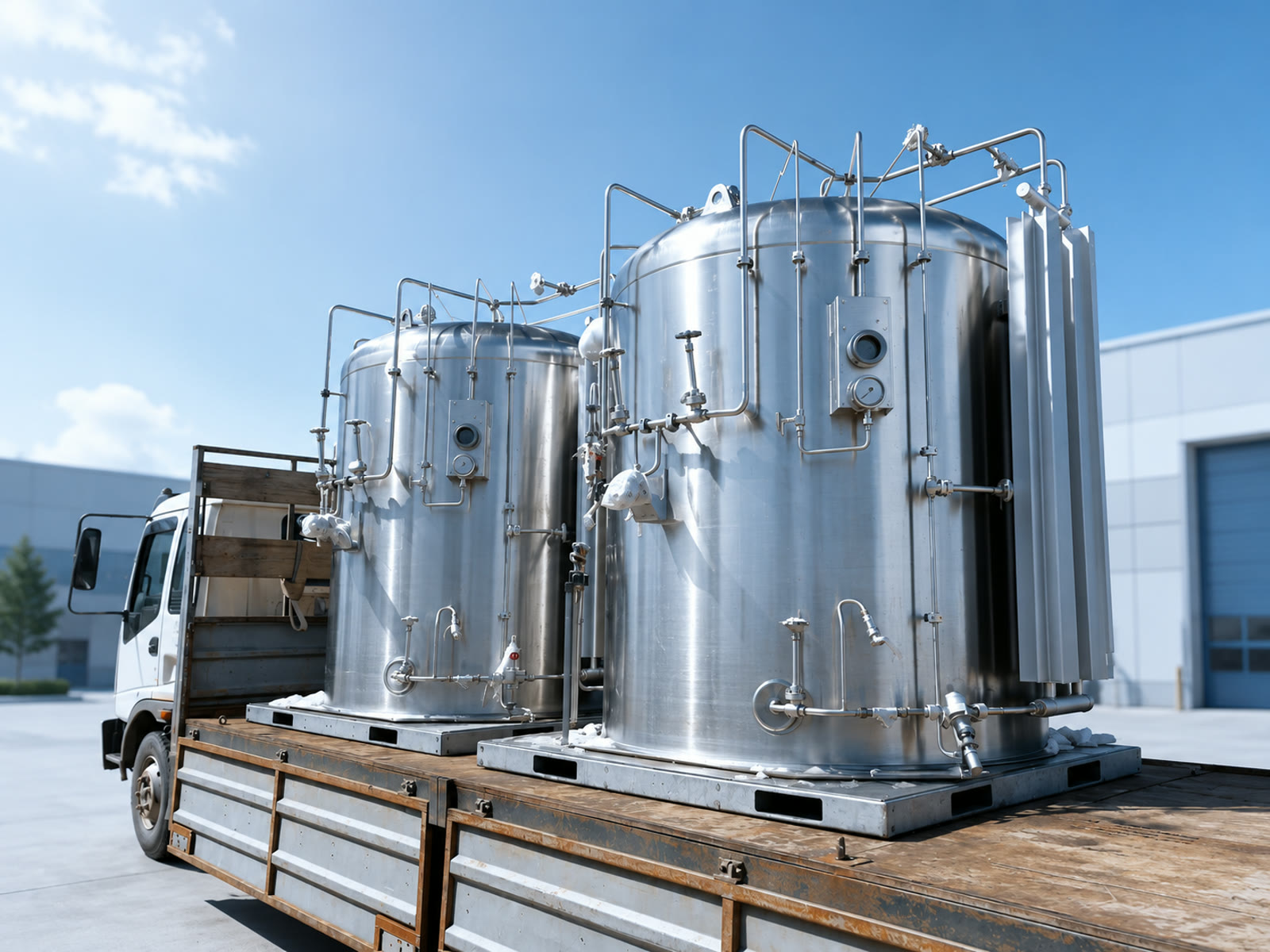
Most of these items arrive factory-fitted. A vertical cryogenic storage tank or vertical cryogenic cylinder typically ships with its valve set, relief devices and gauges installed as vessel trim. The same applies to the horizontal 500 L cylinder and the 20 ft cryogenic tank container, where the piping and valve arrangement is normally part of the build. Loose items — transfer hoses, spare gaskets, replacement relief valves — are packed and shipped with the order when requested.
Process equipment follows the same logic. A cylinder filling pump skid includes its suction and discharge valving. A cryogenic vaporizer and gas heater are supplied with the isolation and relief components their line position requires. Gas-mixing packages — the mixer with buffer tank, the PLC mixing cabinet and the mixture buffer tank — carry their dosing and regulation hardware as part of the unit.
How valves and accessories are selected
Media compatibility. Components in oxygen service are specified for oxygen-clean delivery, with seat and seal materials reviewed for LOX compatibility. Nitrogen, argon and CO2 duties have their own material and cleaning conventions. Oxygen-specific considerations are covered on the liquid oxygen equipment page.
Pressure class. Accessory ratings follow the equipment they serve. A storage-tank circuit working at 0.8–2.2 MPa needs different trim from a filling-pump discharge line at 16–25 MPa. High-pressure manifolds serving seamless gas cylinders sit in a different class again.
Temperature rating. Liquid-line valves use extended stems and materials suitable for cryogenic temperatures. Gas-side components downstream of the vaporizer are specified for near-ambient duty instead.
Connection and code conventions. Thread forms, flange standards, fill couplings and relief-device documentation differ by destination market. Requirements that may apply are reviewed per country and design standard — see the standards hub and the country pages for Australia and New Zealand.
Where accessories fit in the equipment catalog
Accessory scope attaches to every equipment category rather than standing alone. Bulk installations are covered under cryogenic storage tanks and pressure vessels. Smaller vessels sit under cryogenic liquid cylinders and microbulk tanks. Regasification and transfer equipment is described under cryogenic vaporizers and cryogenic pumps. Manifolds, mixers and station hardware belong to gas filling systems, with a worked station example in the CO2 filling station guide.
Cryogenic valve documentation and spares
Component documentation — material certificates, relief-device records, cleaning declarations — is assembled per order and per destination. The article on export certification outlines what a shipping file usually contains. Spare valve kits and replacement hoses can be added to an equipment order, and sourcing them later through the same factory keeps parts consistent with the installed trim. How we qualify the factories behind these packages is described in our note on vetting Chinese suppliers.
Configurations and documentation are confirmed for the specific manufacturer, model and order before production. Send a rough duty description — the vessel or system, media, working pressure and destination country — and we will return the accessory scope a matched factory would include with the package.