Cryofortune Engineer & Supply Co., Ltd. sources cryogenic equipment from a network of Chinese manufacturers. LNG is a service direction the network covers rather than a fixed shelf range. Storage tanks, regasification packages and ISO tank containers are configured for LNG duty per order, with the factory selected for the destination country and design standard.
This page describes what that capability looks like in practice: which equipment classes apply, how flammable-media rules change the specification, and where LNG installations typically sit.
Why LNG is specified differently
LNG is a flammable cryogenic liquid, stored at roughly −162 °C. That one property separates it from nitrogen, oxygen, argon and CO2 service. In most pressure-equipment regulations, flammable media fall into a different fluid group, which can move the same vessel size into a stricter conformity category.
Flammability also drives siting. Separation distances, hazardous-area classification and vent disposal are governed by destination-country rules, and they differ market by market. The standards overview outlines the frameworks the network designs to; the applicable set is confirmed per project.
LNG applications
- Off-grid fuel supply. Sites beyond the pipeline grid run on trucked LNG. A satellite station combines storage, regasification and pressure regulation to feed boilers, kilns or engines.
- Fleet and marine fuelling. LNG serves as a vehicle and vessel fuel. Equipment in this segment is specified around bunkering codes and local fuel-station regulation, which vary by country.
- Peak shaving. Stored LNG is regasified during demand peaks or pipeline interruptions, smoothing supply for utilities and large industrial consumers.
Equipment classes for LNG service
The catalogue item published for LNG is the 40 ft LNG ISO container — a vacuum-insulated tank container for intermodal transport and temporary storage by road, rail and sea. Its capacity, working pressure and holding time are indicative and confirmed per project.
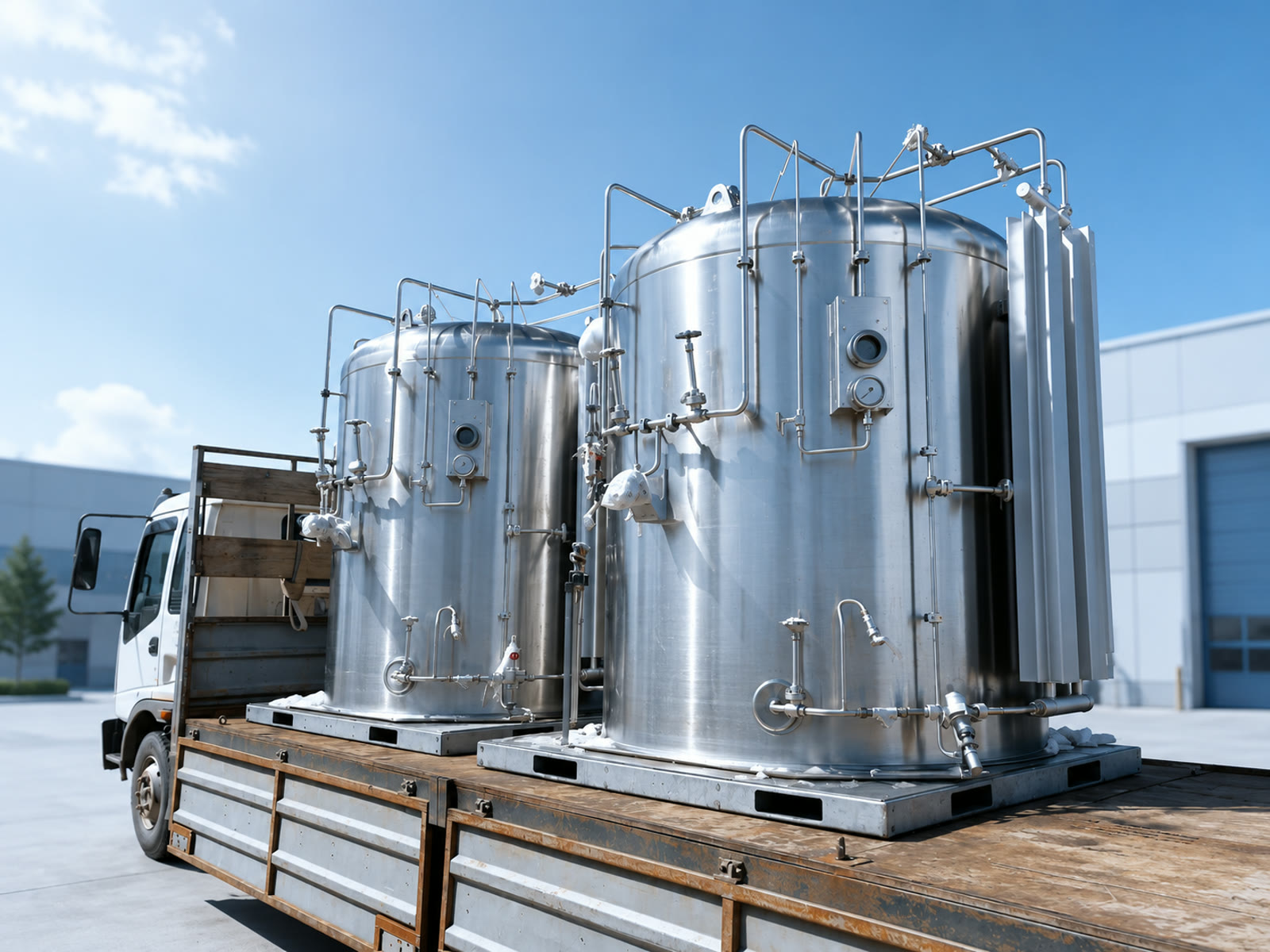
The remaining classes are supplied as per-order configurations. The catalogued vertical cryogenic storage tank range is listed for nitrogen, oxygen, argon and CO2 service; LNG variants of the same class are quoted from manufacturers whose scope covers flammable media. The same logic applies to ambient-air vaporizers used on the regasification side of a satellite station. The cryogenic storage tanks and cryogenic vaporizers pages describe how each class is selected by duty; for LNG, that selection also screens the factory for flammable-media design scope.
LNG equipment compliance by destination
LNG equipment crosses borders with different documentation than air-gas equipment. Design codes, conformity marking and import requirements are set by the destination, and standards such as pressure-vessel and transport codes may apply — the set is selected per destination country. See the country notes for Australia and New Zealand; further markets are covered as country pages are added. The documentation flow from factory to import clearance is described in the export certification article.
Related reading
- 20 ft cryogenic ISO tank container guide — how ISO-frame tank logistics work; much of it carries over to the 40 ft LNG format.
- Equipment by gas: LN2, LOX, LAr, CO2 — how the non-flammable cryogenic media compare with each other.
For non-flammable media, see the liquid nitrogen, liquid oxygen and liquid CO2 equipment pages.
Starting an LNG enquiry
Configurations and documentation are confirmed for the specific manufacturer, model and order before production. Send a rough duty description — daily or peak gas demand, storage volume, site constraints and destination country — and we will indicate what the network can quote for LNG service.