
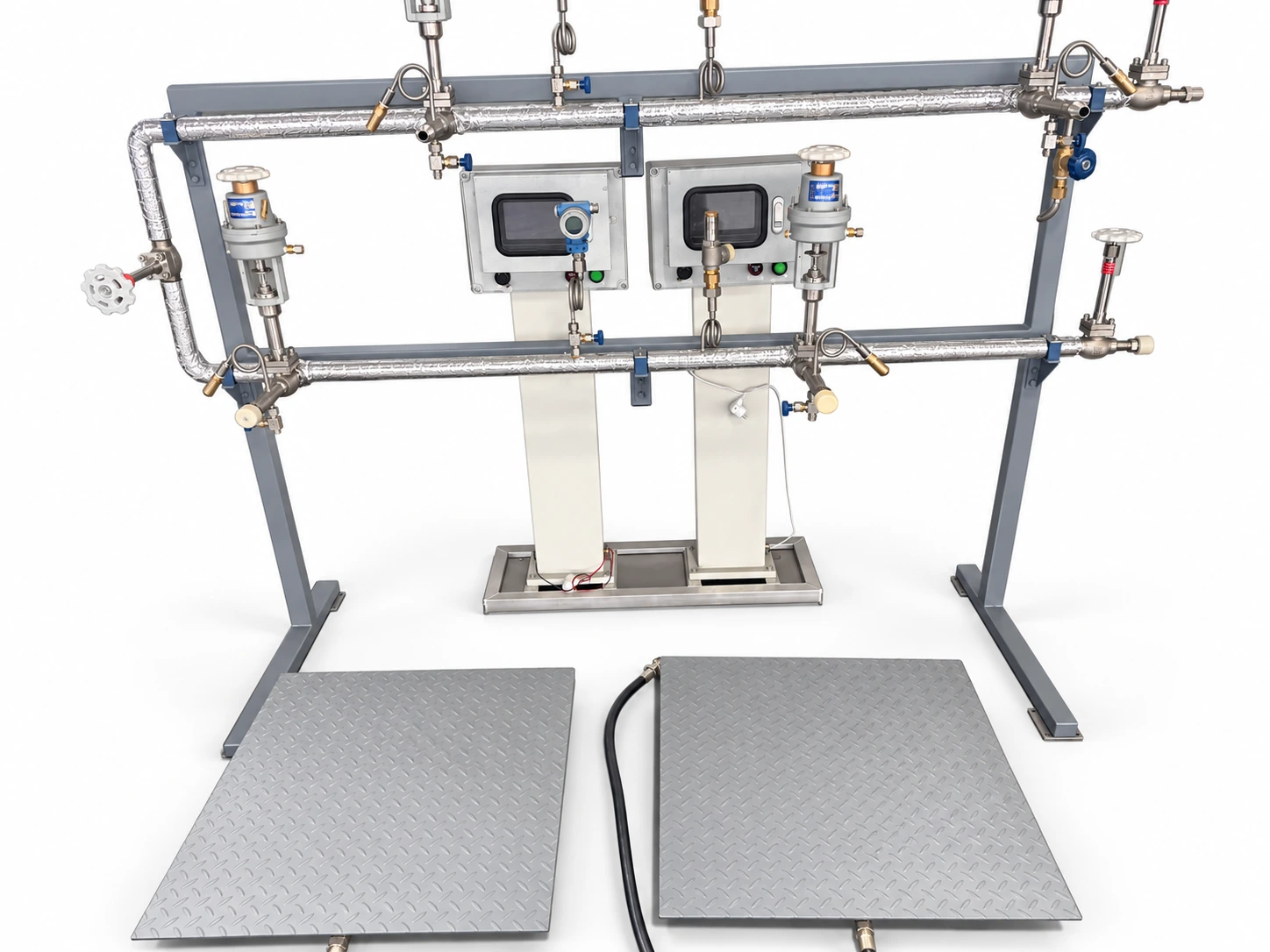
A weight-based filling station uses scales to monitor the mass of product in a receiving vessel. The equipment can be configured for gas cylinders or cryogenic liquid cylinders, with the gas service, vessel connections and filling arrangement selected for the project.
What the scale measures
Three quantities matter when describing a filling duty: the vessel’s tare mass, its gross mass and the mass of product it contains. Tare is the mass of the empty vessel in its specified configuration. Gross mass includes the vessel and its contents. Product mass is the difference between gross mass and the applicable tare.
If a vessel already contains product, the mass added during a fill is a separate quantity: it is the increase from the starting mass to the finishing mass. Distinguishing these values helps specify what the station should display and record.
For liquefied gases, pressure alone does not establish the quantity in a cylinder. EIGA describes measurement by mass for this duty. For cryogenic vessels, weighing is one of the filling methods described in its guidance. The permitted fill quantity still comes from the requirements for the specific gas and vessel. See EIGA Doc 236, section 6.6 and EIGA Doc 125, section 7.5.4.
A two-position station layout
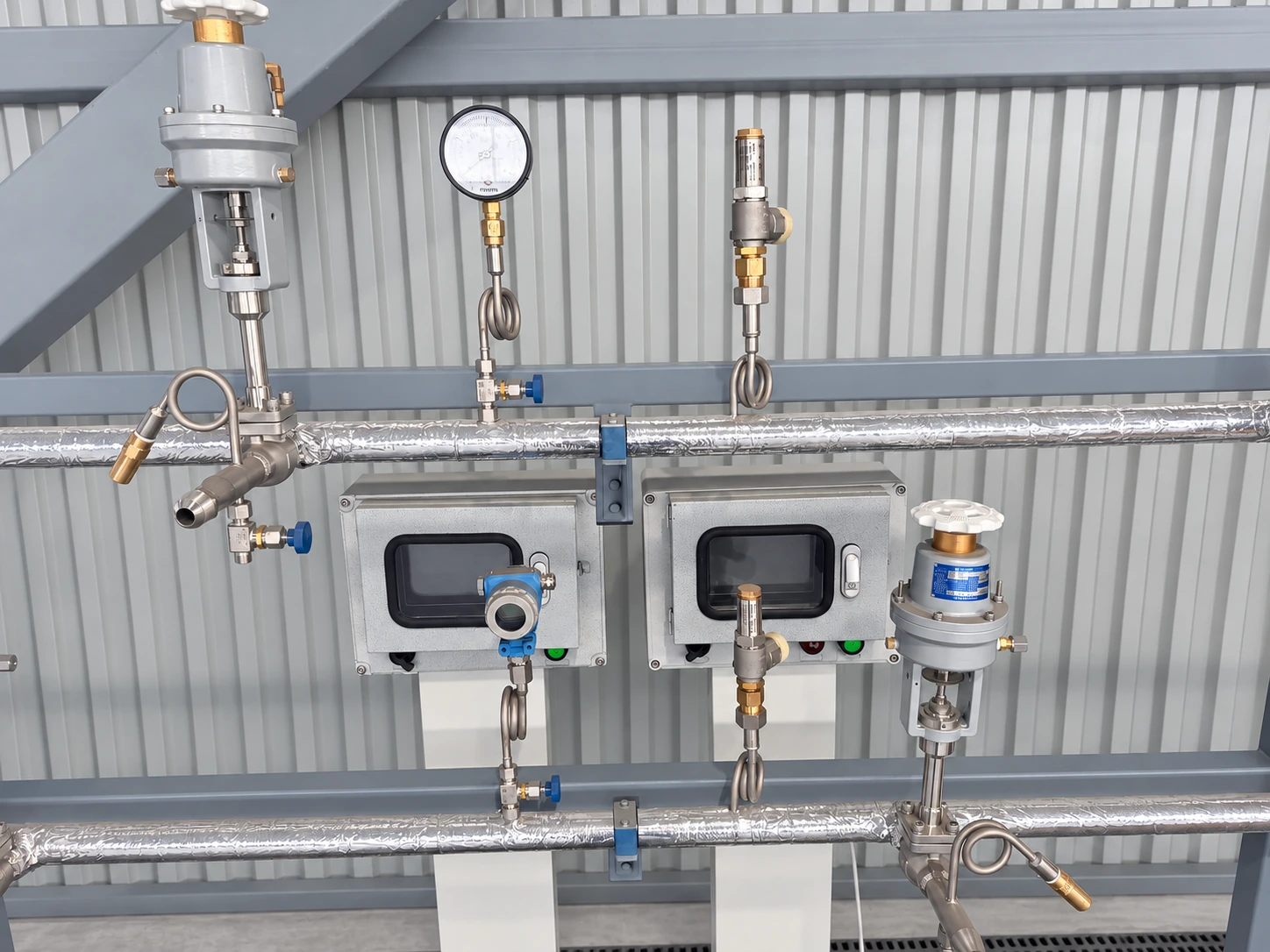
The illustrated arrangement has two weighing platforms, two control units and pipework carried on a supporting frame. The platforms receive the vessels; the control units provide an interface for the filling arrangement. Valve assemblies and instrumentation form part of the equipment layout.
For a new installation, platform dimensions and maximum load need to match the largest vessel, including its contents. The number of filling positions should be considered alongside vessel movement, connection access and the upstream supply. These inputs define a practical station layout.
Configuration starts with the gas and vessel
Different gas services require their own equipment selection. The vessel type, supply conditions, connections, materials and control requirements need to be reviewed together. A cylinder filling duty and a cryogenic liquid-cylinder duty can use the same measurement principle while requiring different filling connections and equipment arrangements.
When adding weighing posts to an existing site, define the boundary between the filling station and the upstream equipment. Storage, transfer equipment and any required conditioning should be included in that review. Our gas filling systems overview describes the wider equipment chain; the cylinder filling module article and filling pump selection guide cover related selection questions.
What to send for equipment selection
- The gas and its supply conditions, plus the intended filling service.
- Vessel type, capacity, dimensions, connection details and maximum gross mass.
- Target product mass and how partially filled vessels are handled.
- Required filling positions, expected workload and available installation space.
- Required weighing performance, control functions and filling records.
- Existing upstream equipment and the destination market.
Discuss your weight-based filling station
Send your gas, vessel details and target filling mass to Cryofortune. Include photographs or a layout of the existing installation so we can review the weighing posts, connections and equipment scope with you.