
What kind of requirement TPED 2010/35/EU is
A gas cylinder filled in one EU country may be emptied in a second and refilled in a third, so the rules that govern it cannot stop at any border. TPED 2010/35/EU — the Transportable Pressure Equipment Directive — is the piece of EU law built for exactly this situation: not a design standard, but the market-access and in-service regime for pressure receptacles that circulate under the dangerous-goods transport rules — gas cylinders, cylinder bundles, tubes and closed cryogenic receptacles. It determines who assesses the equipment, what marking it carries and how it is re-inspected over its life; the technical design rules themselves sit in the dangerous-goods transport agreements, which TPED points to.
TPED scope: transportable pressure equipment that moves
TPED applies to pressure receptacles and tanks used for the carriage of gases under the EU dangerous-goods framework. In cryogenic and industrial-gas practice this typically means:
- seamless and welded gas cylinders and cylinder bundles;
- tubes and multiple-element gas containers;
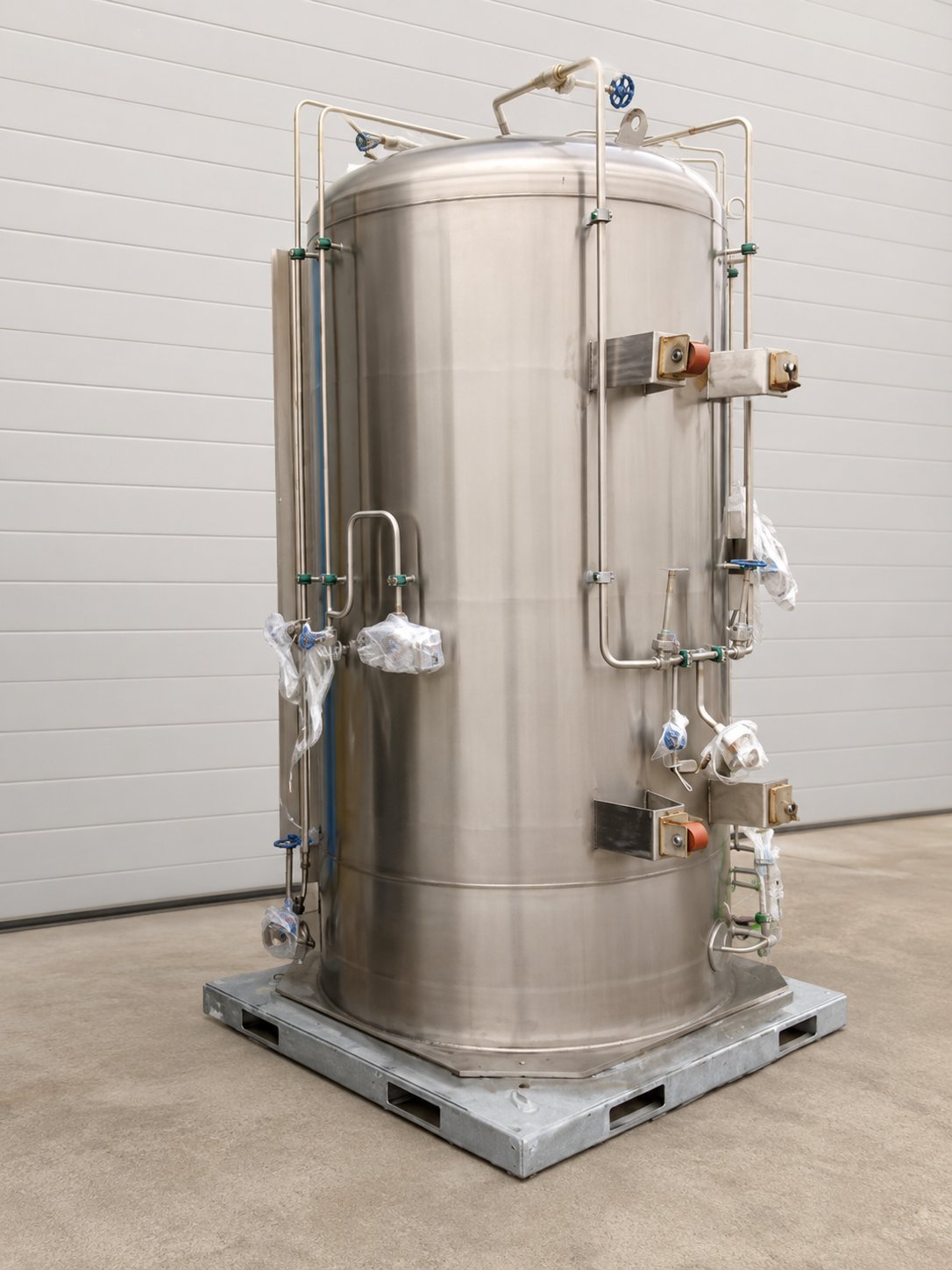
- closed cryogenic receptacles — pressurized, vacuum-insulated vessels for liquefied gases that are filled, transported and emptied in circulation, such as portable vertical and horizontal cryogenic cylinders;
- the valves and other accessories of such receptacles, where covered by the transport rules.
The dividing line is use in transport. A vessel that is filled in one place and consumed in the same place is generally static equipment and falls under a different regime, described below.
TPED and ADR/RID: where the technical rules live
Unlike the Pressure Equipment Directive, TPED does not contain essential safety requirements or conformity modules of its own. It requires that transportable pressure equipment meet the technical provisions of ADR (road) and RID (rail) — and ADN for inland waterways — including the construction, testing and marking rules for pressure receptacles set out in those agreements. In practice a receptacle is designed to a standard referenced by ADR/RID — for cryogenic receptacles and cylinders these are typically EN and ISO standards listed there — and TPED supplies the legal mechanism that turns that technical compliance into market access across the EU. This is a different logic from PED, and the two regimes should not be mixed in a specification.
The Pi (π) marking
Equipment that conforms to TPED carries the Pi (π) marking, followed by the identification number of the notified body involved in the assessment — the transport-equipment counterpart of CE marking, a boundary our CE page examines in detail. Pi declares that the receptacle has been type-approved and inspected under the directive and may circulate and be refilled throughout the EU. Behind the mark stand a type approval for the specific design, supervision of manufacture and an initial inspection of each receptacle — documentation that can be requested and reviewed before an order is confirmed.
Conformity assessment by notified bodies
Assessment under TPED is carried out by notified bodies specifically designated for the directive. Their role covers type examination of the design, surveillance of production, initial inspection and certification of each receptacle before the Pi mark is affixed. A notified body’s number on the receptacle identifies who stood behind the assessment, which is why it is one of the first details a buyer may wish to verify.
Periodic inspection and requalification
TPED is a whole-of-life regime. Receptacles in service are subject to periodic inspection, intermediate inspection where ADR/RID provides for it, and exceptional checks after damage or repair, at the intervals set by the transport rules for the gas concerned. These inspections are performed by bodies recognized under the directive, and a receptacle that passes is stamped with the inspection date. The directive also provides a reassessment-of-conformity route by which existing equipment without a Pi mark can, in some cases, be brought into the regime. Owners and operators in the destination country normally arrange periodic inspection; the manufacturer’s file supports it.
What falls outside TPED
- Static cryogenic tanks. Storage tanks installed at a customer site, such as vertical cryogenic storage tanks, are stationary pressure equipment and fall under PED 2014/68/EU, which requires CE marking.
- Open, non-pressurized dewars. An open-neck liquid nitrogen dewar that does not hold pressure sits outside the pressure-receptacle definitions of TPED; carriage of the refrigerated liquefied gas itself remains subject to the ADR provisions for open cryogenic receptacles.
- ISO tank containers. A 20ft cryogenic tank container in international multimodal service is normally certified as a UN portable tank against the portable-tank instructions of the IMDG Code and the multimodal chapters of ADR, rather than Pi-marked under TPED; the routes are compared in our ISO tank container guide.
Buyers shipping to Great Britain should note that a separate domestic scheme applies there — the rho (ρ) marking under the GB carriage of dangerous goods regulations, assessed by GB-appointed bodies; UKCA does not apply to transportable pressure equipment. See UKCA marking for the adjacent static-equipment conformity landscape.
Pi-marked receptacles from a Chinese factory
A factory outside the EU can supply Pi-marked receptacles, but only through the same mechanism as a European one: a type approval issued by a notified body for that factory’s specific design, plus ongoing production surveillance. Such approvals belong to a particular manufacturer, site and model — they do not transfer between factories and cannot be claimed generically. Within our network of Chinese manufacturers, some plants hold TPED type approvals for certain cylinder or cryogenic-receptacle designs and others do not, so the factory is selected against the requirement rather than the other way around. Statutory steps in the destination country — registration of the operator, filling permissions, periodic-inspection arrangements — rest with the buyer or importer; Cryofortune arranges the supporting manufacturer documentation. The general approach is described in our note on export certification.
Questions worth asking before ordering
- Is this receptacle offered with a Pi marking, and against which ADR/RID-referenced design standard?
- Which notified body issued the type approval, and does it name this factory and this model?
- What periodic-inspection interval applies to the intended gas, and when is the first retest due?
- Are the valves and safety accessories covered by the same assessment?
These are ordinary due-diligence questions, and a manufacturer with a genuine approval can answer them with documents rather than assurances. As with every page in this section, availability and applicability of any standard, certificate, marking or registration procedure are confirmed for the specific manufacturer, model and order before production. Send us the receptacle type, gas service and destination country, and we will identify which factory in the network can support the requirement and what documentation can accompany the order.