
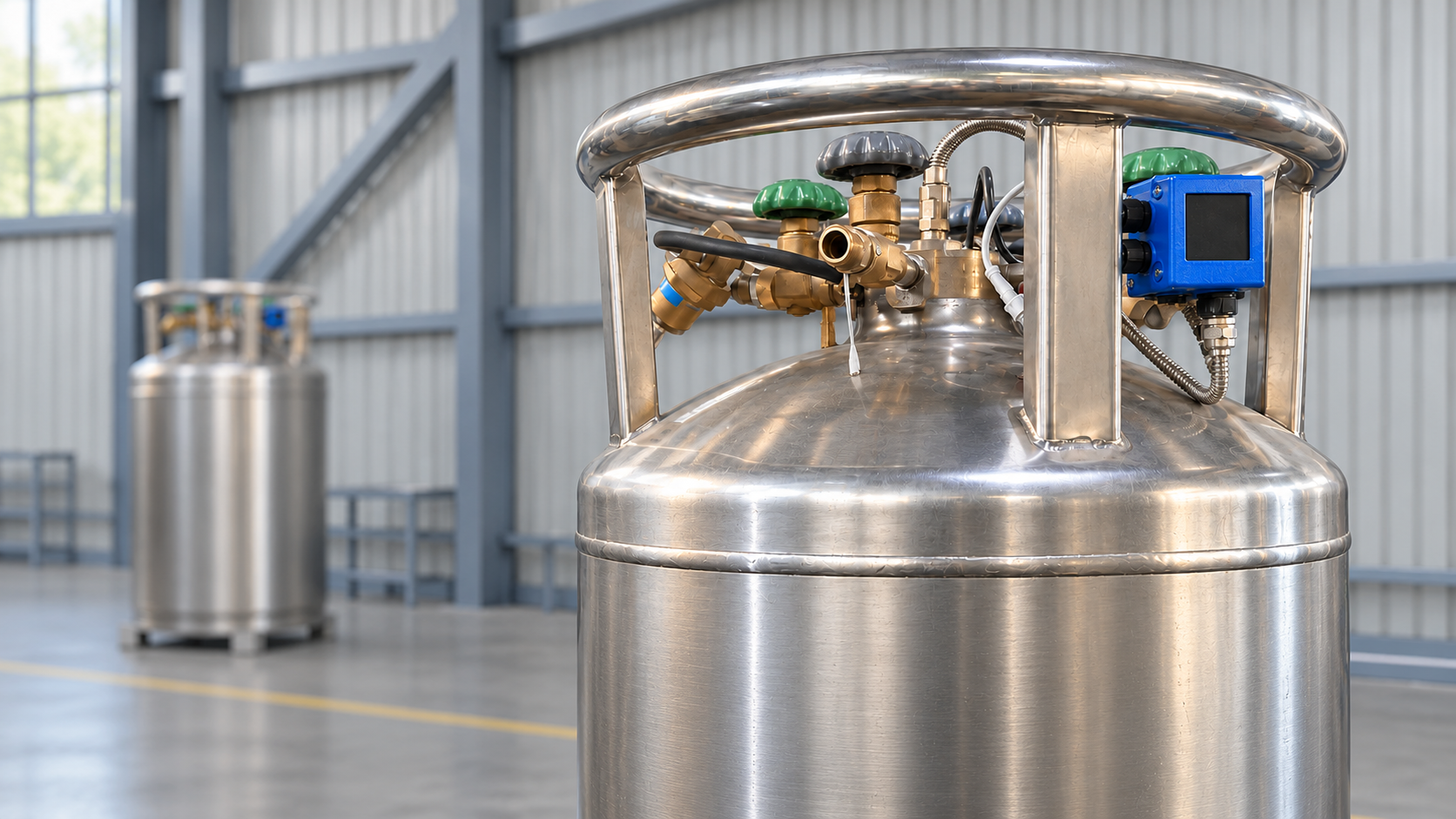
Cryogenic cylinder telemetry can do more than show a remote liquid level. By connecting equipment identification, logistics records and gas inventory history, CryoFor Telemetry brings cylinder circulation and industrial gas supply operations into one digital platform.
The system combines QR-based equipment transfers, location identification through Wi-Fi telemetry hubs, historical records and integration with enterprise information systems. Gas suppliers can follow cylinders across their fleet, while industrial customers can review the equipment and gas inventory associated with their own operations.
Two complementary ways to identify a cylinder’s location
QR codes for deliveries, transfers and returns
Each cryogenic cylinder has a unique QR code linked to its digital equipment record. During logistics operations, employees scan the code to register a transfer between the supplier, a logistics location and a customer.
The record identifies the sender, recipient, date and time. Integration with order, delivery and return management keeps the equipment’s recorded location and the customer’s telemetry access aligned with those transfers.
Wi-Fi hubs for identification within a facility
Each telemetry hub has a unique identifier and is assigned to a customer, facility and production zone. When a cylinder sends telemetry through that hub, the platform associates the cylinder with the hub’s assigned location.
For example, a facility could assign four hubs as follows:
- Hub 1: full cylinder storage.
- Hub 2: laser cutting workshop 3.
- Hub 3: welding workshop.
- Hub 4: empty cylinder storage.
If cylinder 125 reports through hub 2, the platform records it in the zone assigned to that hub: laser cutting workshop 3 at that customer’s facility. This is zone identification based on the reporting hub; hub placement and coverage must support the intended zone layout.
A movement timeline linked to telemetry
Changes in the reporting hub create a history of movements between production zones. In the example above, a cylinder could first report from full cylinder storage, then from the laser cutting workshop, and finally from empty cylinder storage.
The resulting sequence is: full cylinder storage → laser cutting workshop 3 → empty cylinder storage. Each transition is dated and timed when the cylinder is detected through the corresponding hub.
The customer can view this timeline alongside telemetry charts to see the cylinder’s recorded location, changes in gas inventory and the production zone associated with consumption during a selected period. Additional QR scans are not needed for zone changes registered through the hubs.
Historical access that follows the customer relationship
A cylinder may serve several customers over its life. The supplier retains the equipment’s complete operational history, while each customer can access only the periods associated with their own use.
Returning a cylinder does not remove the customer’s access to their previous operating records. They can still review its location history, movements and gas inventory changes for the time it was at their facility.
An operating cycle starts with a refill and ends immediately before the next refill. The platform associates cycles with customers and their registered equipment-use periods. Logistics records, QR transfers and hub identification support automatic granting and withdrawal of access as equipment circulates.
The system also keeps the history of hub assignments. Moving a hub to a different workshop does not rewrite the location attached to earlier records.
Reconstruct gas operations for a previous date
Order management and telemetry are connected so a customer can select a date within the retained history and review the cylinders recorded at their facility during that period.
- The number of cylinders and their distribution across production zones.
- Recorded filling levels and changes in gas inventory.
- Equipment movements, deliveries and returns.
- Inventory and consumption charts for individual cylinders and production areas.
This historical view helps teams compare gas consumption with production activity and review equipment utilization across shifts, workshops and operating periods.
One management view across workshops and gas types
Enterprise management can use consolidated analytics across the facility rather than reviewing each cylinder separately. The dashboard brings together cylinder counts, distribution by zone, current inventory by gas type and consumption trends.
Managers can move between enterprise-wide totals and individual workshops to review gas consumption, deliveries, returns and inventory movements. This supports procurement planning, reserve management, equipment utilization reviews and analysis of gas supply costs.
API integration with enterprise systems
The platform supports secure API access to current and historical data using individual customer API keys with defined permissions. This allows telemetry to be connected to ERP, MES, warehouse and production information systems.
Available data includes cylinder records, telemetry readings, hub-based locations, movement history, inventory trends and consumption. Consolidated information can be retrieved for the facility, individual production zones and different gas types.
API access follows the same customer boundaries as the platform: a customer can retrieve only the current and historical information they are authorized to see.
Wi-Fi architecture for industrial sites
Cellular coverage inside workshops can be affected by metal structures, machinery and building layout. Some facilities also restrict cellular equipment under their information security or operating policies.
TM2 can report directly through the site’s 2.4 GHz Wi-Fi router or through a local telemetry hub, according to the selected configuration. The hub-based configuration described here separates the local cylinder connection from the internet uplink and supports zone identification through assigned hubs. A telemetry module communicates with a nearby Wi-Fi hub. The hub then forwards data through an approved corporate Wi-Fi network, a wired connection or a separate GSM gateway positioned outside restricted areas, according to the selected configuration.
A dedicated local Wi-Fi network can also be arranged separately from the corporate network, subject to the facility’s security requirements. GSM connectivity is therefore not required on every cylinder. Hub coverage, network permissions and the uplink arrangement are defined for the site.
Web, mobile and Telegram access
Information is available through a web interface, mobile access and a Telegram bot, with the API providing a further route into enterprise systems. Suppliers, logistics teams, production staff and managers can use the same equipment records through the access appropriate to their roles.
From remote readings to cylinder fleet management
For gas suppliers, the platform connects equipment circulation with customer access and telemetry history. For industrial users, it links gas inventory and consumption to production zones and operating periods. For management, it brings the whole facility into a consolidated view.
To discuss a configuration, share your fleet size, gas types, delivery and return workflow, production-zone layout and permitted network connections. Discuss your telemetry and asset management project.