The Andean copper belt is one of the most concentrated sources of industrial gas demand in the Southern Hemisphere. Chile and Peru are the world’s top copper producers, and copper is an oxygen-hungry metal: modern smelting and refining consume oxygen at industrial scale, either piped from on-site plants or delivered as liquid and regasified on demand. Around the ore bodies of the Atacama, the Antofagasta region and Peru’s southern copper corridor, the same operations run medical oxygen for high-altitude camps, nitrogen for inerting and process safety, welding and cutting gases for the maintenance shops that keep trucks and mills moving, and, increasingly, LNG for power at sites far from the grid.
Mining is the anchor, but not the whole story. Chile and Peru are major food exporters — fruit, berries, fish and seafood — and export agriculture pulls steady demand for freezing and cold-chain capacity built on liquid nitrogen and CO2. Add hospital networks, steel fabrication and chemical plants around Santiago, Lima and Bogotá, and the result is a durable regional market for cryogenic storage, vaporization and gas-distribution equipment.
Cryofortune Engineer & Supply Co., Ltd. is an international sourcing and engineering supplier, not a factory. Each order is placed with a vetted manufacturer from our network in China, matched to the technical requirements, code basis and documentation scope of that specific project. This page covers Chile, Peru, Colombia and their neighbours in the Andean market. Brazil and Mexico are large enough to have dedicated pages — see Cryogenic Equipment for Brazil and Cryogenic Equipment for Mexico — and the full list of markets is on our equipment by country page.
Equipment We Supply to the Andean Market
The scope for Latin American buyers is assembled per order from our manufacturer network. Typical categories include:
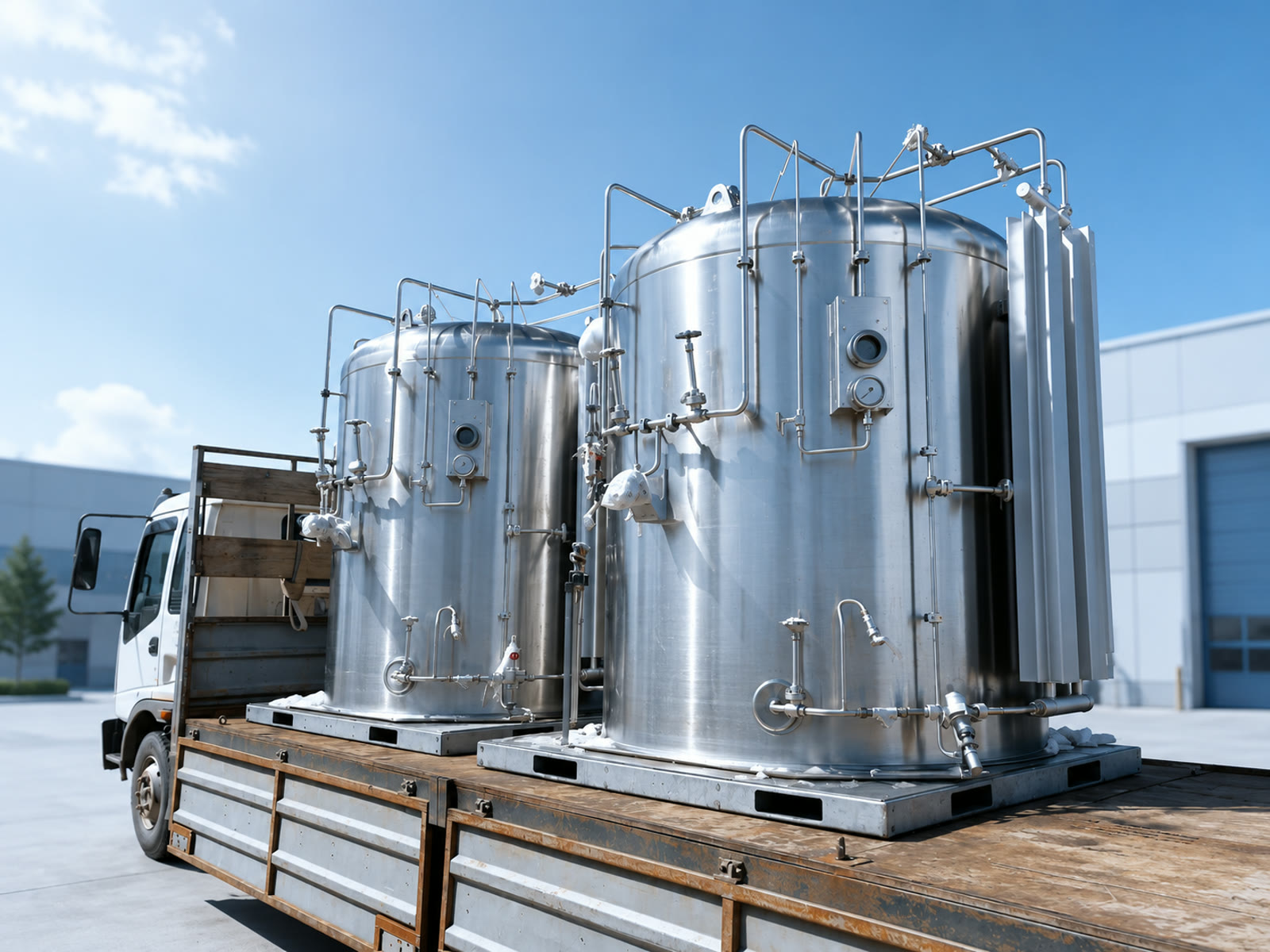
- Cryogenic storage tanks — vertical and horizontal vacuum-insulated tanks for liquid oxygen, nitrogen, argon, CO2 and LNG service, from gas-plant storage to customer stations at mine sites and food plants.
- Cryogenic vaporizers — ambient-air, water-bath and steam-heated units; for high-altitude sites, ambient vaporizer selection is a genuine engineering decision rather than a catalog lookup, as discussed below.
- Cryogenic liquid cylinders — portable dewars for medical oxygen distribution, laboratories and workshops where a fixed tank is not justified.
- Pressure vessels — buffer tanks, air receivers and process vessels built to the code basis the project requires.
Related hardware — manifolds, pressure-regulation skids, filling-station equipment — is quoted together with the main items when the enquiry calls for a complete station rather than a single tank.
Regulatory Sketches: Chile, Peru, Colombia
We describe the regulatory landscape only in outline, because the details evolve and their application depends on the site, the medium and how the installation is classified. The applicable current rules and their application are confirmed per order with the buyer’s local engineers.
Chile. Mining operations fall under the safety oversight of Sernageomin, with the mining safety regulation framework (DS 132) setting general obligations for equipment used at mining sites; outside mining, general workplace-safety and pressure-equipment rules apply per current Chilean law. In practice, Chilean buyers tell us which approvals and inspections their installation will face, and we align the manufacturer’s documentation package with that list before production starts.
Peru. Equipment safety at mining operations is governed by the mining occupational safety and health regulation DS 024-2016-EM, as amended, while general industrial-safety rules apply outside the mining sector. The owner’s engineers and their inspection body define what the documentation must demonstrate; our role is to have the manufacturer produce and certify to that agreed basis.
Colombia. Colombia operates a general occupational safety framework rather than a single dedicated pressure-equipment regime, and imported pressure equipment is typically built to ASME. Buyers normally specify ASME design together with the documentation package their insurer and inspection body will accept — a scope we confirm per order.
Where Mining Uses Gas — and What It Means for Equipment
Copper smelting and refining are the headline consumers: oxygen enrichment supports smelter throughput, and where oxygen is delivered as liquid, it is stored in cryogenic tanks with vaporizer trains sized for the process draw. Around that core sit demands that are smaller individually but constant across the belt:
- Medical oxygen for camps and clinics at high-altitude operations, stored in tanks or distributed in liquid cylinders;
- Nitrogen for inerting, purging and process safety in concentrators and refineries;
- Welding, cutting and shielding gases for the maintenance shops behind every mill, conveyor and truck fleet;
- LNG as a power and heat fuel at remote sites, where storage and regasification follow the same cryogenic logic as oxygen and nitrogen systems.
The practical consequence for a sourcing supplier: most Andean enquiries are station-type packages — tank, vaporizer set, pressure regulation — specified around a known daily draw and a known site, rather than single catalog items.
Codes and Documentation: ASME as the Regional Language
Across Chile, Peru and Colombia, imported pressure equipment is most commonly specified to ASME Section VIII, and ASME-designed vessels are the default expectation of owners, insurers and inspection bodies. Our network includes manufacturers that build to ASME; whether a given order needs a code stamp or an ASME-based design with third-party inspection is defined by the buyer’s side and fixed in the contract before production.
Spanish-language documentation is a normal expectation in the region — nameplates, operating documentation and data-book summaries in Spanish are arranged per order with the manufacturer. Two points never change: certificates and code stamps belong to the specific manufacturer, model and order, not to the Cryofortune brand; and statutory steps in the destination country — import registration, installation approval, in-service inspection — are carried out by the buyer, importer or their local representative, while we arrange the manufacturer documentation those steps rely on.
Altitude: The Variable That Shapes the Specification
Many Andean sites sit between 3,000 and 4,800 metres above sea level, and thin air is an input to the equipment specification, not a footnote. Ambient vaporizers take their heat from the surrounding air, so lower air density affects achievable capacity; relief-device sizing and pressure-system design also see the reduced ambient pressure. There is no honest universal derating figure — the effect depends on the site’s elevation, temperature profile, humidity and wind — so equipment for altitude is specified against the actual site conditions stated in the enquiry. Sizing a vaporizer for Callao’s sea level and for the same duty at a cordillera mine are two different sizing exercises, which is why we ask for site altitude in every Andean enquiry.
Logistics: Pacific Ports and the Road to the Cordillera
Shipments from Chinese ports run to the Pacific gateways — San Antonio for Chile, Callao for Peru — as containerized cargo for liquid cylinders and smaller vessels, or as breakbulk and flat-rack loads for larger tanks. Oversize road moves from port up to the cordillera — permits, escorts, route surveys — are handled by the buyer’s logistics side or their local representative; we prepare the equipment for ocean transport and provide the packing and shipping documentation the customs broker needs.
How the Manufacturer Is Selected
We treat not being a factory as an advantage: no single plant is the right answer for a medical-oxygen station in Arequipa, an LNG tank for a northern Chilean mine and a batch of liquid cylinders for a hospital network. For each order we select from our vetted network based on the required code basis (including ASME capability where needed), the product type and size range, export experience and current audit status. The process is described openly in How Cryofor Selects a Manufacturer.
Documents You Receive
The documentation package is fixed per order before production. Typical scope for Latin American buyers includes the manufacturer’s quality and test documentation, material traceability, design documentation to the agreed code basis, and export paperwork, with Spanish-language items included where agreed. What can and cannot be certified for a given manufacturer and model is confirmed in advance — see export certification of cryogenic equipment for how this stage works.
Request a Quotation
To receive a concrete offer for Chile, Peru, Colombia or a neighbouring market, send an enquiry with the medium (oxygen, nitrogen, argon, CO2 or LNG), the required capacity and working pressure, the destination country together with the site altitude, and whether the installation serves a mining operation or general industry. With those inputs we return a technically checked proposal from the appropriate manufacturer in our network — write to us through the contact page.
Availability and applicability of any standard, certificate, marking or registration procedure are confirmed for the specific manufacturer, model and order before production.