Poland runs cryogenic equipment through two layers at once. The first layer is European: a cryogenic storage tank or a vaporizer skid entering the Polish market is assessed under EU pressure equipment law and carries the CE marking, and that work happens at the factory, before the equipment ships. The second layer is Polish: once the tank stands on a site in Mazovia or Silesia, it enters the world of the Urząd Dozoru Technicznego — the Office of Technical Inspection, universally known as UDT — and it is UDT’s acceptance of that specific installation, not the CE plate alone, that decides when the equipment may actually run.
Polish buyers know this split better than most. CE settles market access; UDT settles operation. In practice, Polish operators plan purchases around one question — will UDT accept this documentation — and a supplier who has not prepared for that question has not prepared the order. This page is the Polish breakout from our European overview, part of the wider by-country series: the EU conformity layer is common to the whole single market, while the national layer is where a Polish order is really decided.
One clarification before the detail. Cryofortune Engineer & Supply Co., Ltd. is an international sourcing and engineering supplier, not a factory. We source cryogenic and gas equipment from a network of vetted Chinese manufacturers, match each order to the plant best placed to build it, and manage engineering, documentation and shipment. Every certificate on a Polish order therefore belongs to a specific manufacturer, model and production run — never to our brand name — and that is exactly how the EU framework and UDT expect documentation to read.
Equipment Polish buyers source through Cryofortune
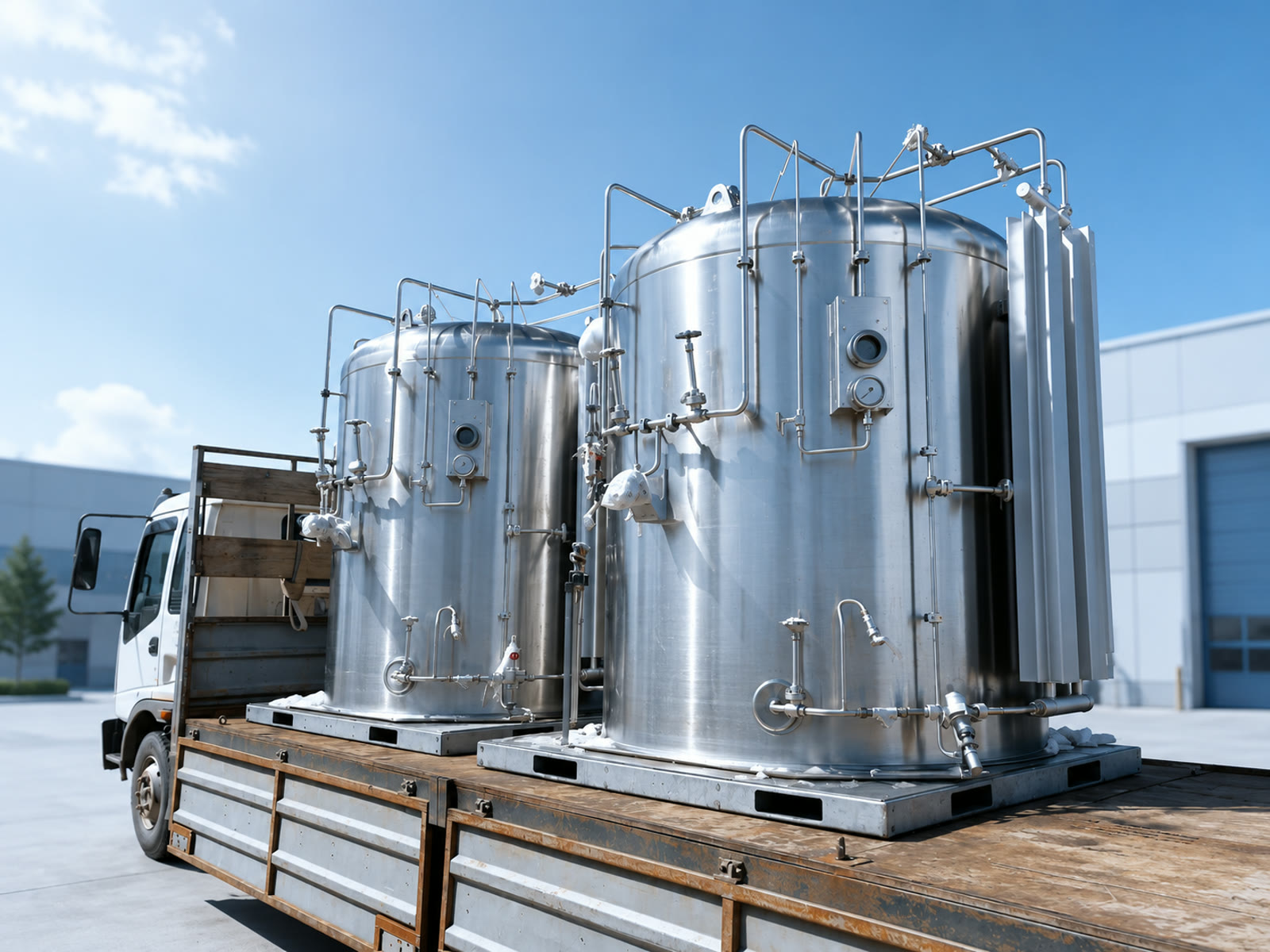
The requests we see from Polish gas companies and industrial operators fall into a few families. Cryogenic storage tanks — vertical and horizontal vacuum-insulated vessels for liquid oxygen, nitrogen, argon, carbon dioxide and LNG — anchor most projects, from a single tank behind a fabrication shop to a distributor’s fleet. Cryogenic vaporizers, ambient-air and heated designs, turn stored liquid back into gas at the pressure the process needs. Cryogenic liquid cylinders serve customers whose volumes do not justify a fixed tank, and pressure vessels such as buffer and storage tanks complete gas-supply systems. Capacities, working pressures and configurations are agreed per order against the site and the duty — we do not publish a fixed range, because the manufacturer network covers a wide one.
The EU layer: PED 2014/68/EU and CE at the factory
Static pressure equipment placed on the Polish market falls under the Pressure Equipment Directive, PED 2014/68/EU, which Poland applies as part of the single market. The directive sorts equipment into conformity categories by pressure, volume and fluid, and for most cryogenic vessels the route runs through an EU notified body: design examination, surveillance of production or of the quality system, and an EU declaration of conformity behind the CE marking. All of this is completed at the manufacturer’s works before shipment — a Polish buyer should never be asked to “finish” CE conformity after arrival. Which category applies, which module route is used and which notified body is involved are properties of the specific order, and we confirm them before production rather than assert them in advance.
Transportable receptacles follow a different instrument. Gas cylinders, bundles and other transportable pressure equipment are covered by TPED 2010/35/EU and carry the Pi marking rather than CE. Cryogenic liquid cylinders sit close to the boundary between the two regimes: whether a given vessel is treated as transportable or as static equipment depends on its design approval and intended service, so we settle the regime — and the marking that follows from it — per order.
The Polish layer: UDT and technical supervision
UDT — Urząd Dozoru Technicznego, the Office of Technical Inspection — is the institution around which pressure equipment operation in Poland is organised. Devices subject to technical supervision (dozór techniczny) under Polish law are registered with UDT, examined before they are put into service and then examined periodically for as long as they operate. A cryogenic tank installation with its vaporizers and safety accessories will typically pass through that gate before commissioning; which devices fall under which form of supervision, and on what examination cycle, follows the device categories and forms in current UDT practice and is confirmed for the specific configuration of each order.
This is the point CE-focused suppliers miss. The CE marking gives a tank the right to be sold anywhere in the EU; it does not by itself put a Polish installation into service. UDT reviews the documentation of the specific device — design and manufacturing records, conformity documents, safety-accessory data — and examines the installation as built. Polish operators are correspondingly direct in their purchasing: the documentation package is not an accessory to the tank, it is half of the product.
Two practical consequences follow for an imported order. First, the manufacturer’s file must be complete, consistent and traceable to the exact serial number delivered — a brochure-grade package will stall the process. Second, Polish-language documentation is the practical expectation for the UDT file, so we agree per order which documents are issued or translated into Polish for submission. The statutory steps themselves — registering the device, filing applications, hosting UDT examinations — belong to the operator, the importer or their local representative in Poland; our part is to make sure the manufacturer’s side of the file gives them everything the process needs.
The importer’s position
A Polish company buying directly from a Chinese manufacturer becomes the importer in the EU sense, and EU pressure equipment law attaches duties to that role — broadly, verifying that the manufacturer carried out the correct conformity assessment, that the CE or Pi marking and required documents accompany the equipment, and that the importer is identifiable with the product. None of this is exotic for Polish gas distributors, many of whom import actively and have run this route for years. For first-time importers the point to hold onto is that the duties are administrative and carried by documentation — which is exactly the part we prepare with the factory. Customs clearance, taxes and any national notifications sit with the importer or a local representative; we support that side with the paperwork rather than standing in for it.
Where the equipment goes in Poland
Poland’s demand profile is one of the strongest in the region. The manufacturing base — metal fabrication, automotive components, machine building, household appliances — consumes welding and cutting gases at scale, and every serious fabrication site eventually weighs bulk supply: a storage tank with vaporizers replacing cylinder logistics. Food processing is the second pillar, with freezing, chilling and packaging on nitrogen and carbon dioxide across meat, dairy and prepared foods. Fast-growing distribution and logistics fill out the picture, and Poland’s independent gas distributors are notably active importers — sourcing their own tank fleets, liquid cylinders and station equipment rather than waiting on the majors. A distributor building out supply infrastructure across several voivodeships is one of the most common Polish requests we see.
Selecting a factory for a Polish order
Not every plant in the network fits a Polish order. The manufacturer needs current PED experience with an EU notified body — a working conformity routine, not a certificate obtained once for a single shipment — plus the documentation discipline to produce a file UDT can review without gaps, and the willingness to support Polish-language deliverables and post-shipment questions. That filter removes a good share of otherwise capable factories. How we apply it is described in how Cryofortune selects a manufacturer, and the wider due-diligence method — audits, certificate verification, production oversight — in our guide to vetting a cryogenic equipment supplier in China. The result on a Polish order is a shortlist, not a lottery: factories whose documentation practice is built for exactly the scrutiny the Polish file will meet.
Documents that can accompany a Polish order
The package is defined per order, but a typical scope for a PED vessel bound for Poland includes:
- EU declaration of conformity and the notified body certificates produced by the chosen module route;
- the manufacturer’s data book — design documentation, material certificates, welding and NDT records, pressure test reports — traceable to the delivered serial number;
- safety accessory documentation, including valve certificates and setting records;
- operating and maintenance manual, nameplate details and marking records;
- for transportable equipment, the Pi-marking documentation under TPED in place of the CE set;
- Polish-language versions of the documents agreed for the UDT file.
This is the typical scope, not a promise attached to every product. The exact package follows the conformity route and category of the specific order, and we fix its contents with the buyer — including what the UDT submission will need — before production begins.
Confirming a Polish configuration
The fastest way to a firm proposal is a short set of facts: the medium — oxygen, nitrogen, argon, carbon dioxide or LNG; the volume you need stored; the working pressure of the receiving process; the voivodeship and site conditions; and whether the UDT process is already engaged — an appointed local representative, an operator with UDT experience, or a first installation where the sequence still needs mapping. With that, we shortlist manufacturers, align the documentation plan with the Polish file from day one, and return a configuration you can put in front of your inspector. Send the details through the contact page.
Availability and applicability of any standard, certificate, marking or registration procedure is confirmed for the specific manufacturer, model and order before production.