In Indonesia, an imported cryogenic tank answers to the labour ministry before it earns its first fill. Pressure vessels and storage tanks in Indonesian workplaces sit inside the occupational safety and health system — K3 — administered by the Ministry of Manpower (Kemnaker), under the framework of Permenaker No. 37 of 2016 on Bejana Tekanan dan Tangki Timbun: pressure vessels and storage tanks. Equipment goes through K3 examination and testing — the riksa uji — by authorised inspectors before use and periodically afterwards, usage approvals are tied to the installation, and a parallel licensing track covers the personnel who operate it. Any supplier can put a tank on a ship to Jakarta. Getting it legally into service is the actual project.
This page is the Indonesia breakout from our regional Southeast Asia overview and part of the wider country-by-country series. It covers the equipment we supply, how the Kemnaker layer looks from the supplier’s seat, the design codes that travel well, why nickel has turned Indonesia into one of the most closely watched gas markets in the world, and what to send to start an enquiry.
One thing before the detail, because everything else on this page depends on it. Cryofortune Engineer & Supply Co., Ltd. is an international sourcing and engineering supplier: equipment comes from a network of vetted Chinese manufacturers, we are not a factory, and every certificate in the file belongs to a specific manufacturer, model and order — never to our brand. Statutory steps inside Indonesia are performed by the buyer, the importer of record or their local representative; our role is to arrange the manufacturer documentation those steps depend on.
Cryogenic equipment supplied to Indonesia
Indonesian enquiries cover the standard industrial-gas set:
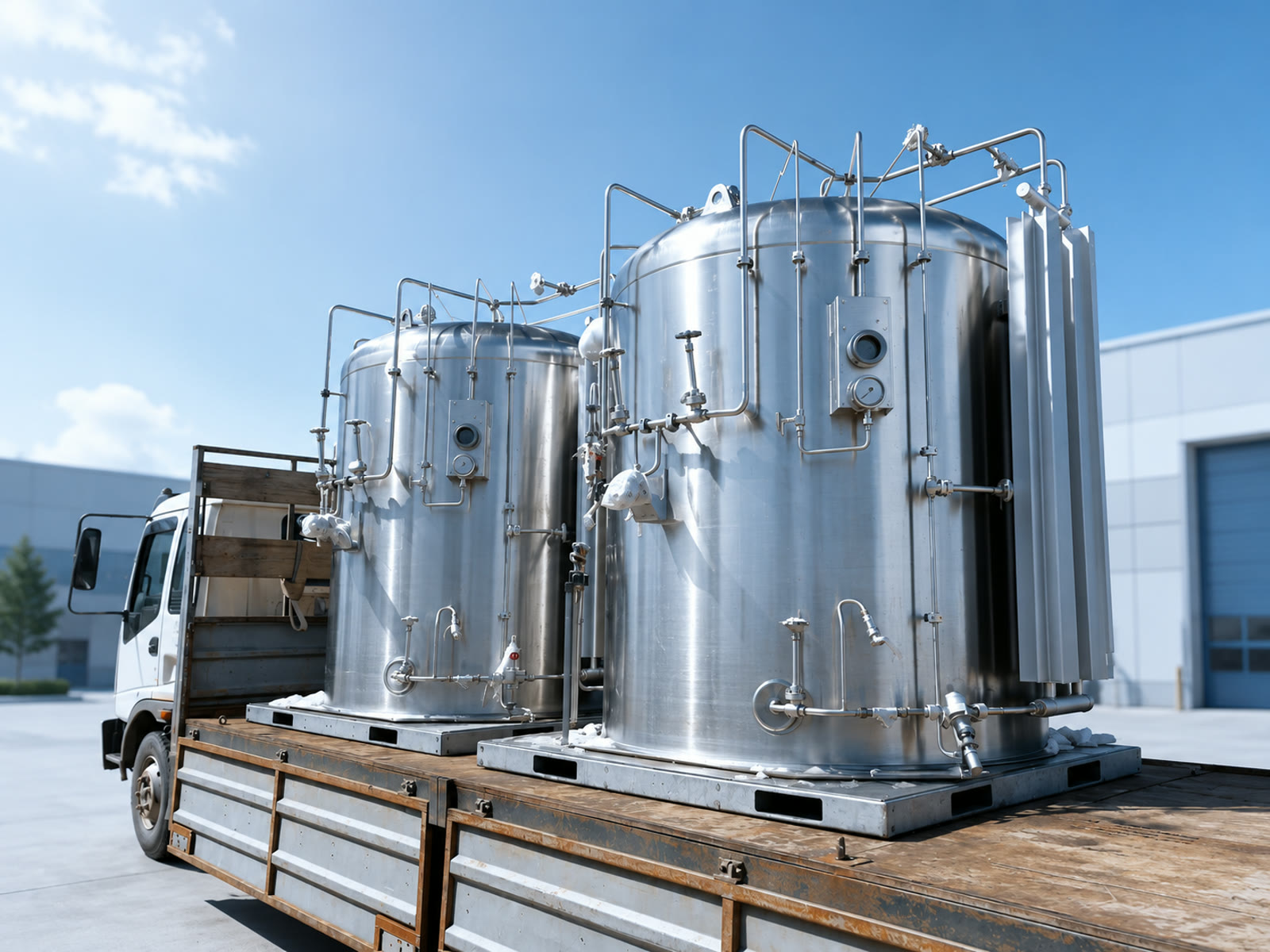
- Cryogenic storage tanks — vertical and horizontal vacuum-insulated vessels for liquid oxygen, nitrogen, argon, CO2 and LNG, from cylinder-filling stations to bulk storage at smelters and hospitals.
- Cryogenic vaporizers — ambient-air and heated units that turn stored liquid into process gas, sized against the site’s draw-off profile and a humid tropical climate that shapes frosting behaviour.
- Cryogenic liquid cylinders — portable vacuum-insulated cylinders for distributors and for end users whose volumes do not yet justify a static tank.
- Industrial pressure vessels — buffer vessels and other unfired pressure equipment fabricated to a recognised design code.
- 20 ft cryogenic ISO tank containers — the format that makes the most sense of Indonesian geography, covered further below.
Configuration — capacity, working pressure, orientation, skid packaging — is fixed per order against the duty and the installation, not read off a brochure.
The K3 layer: Kemnaker, Permenaker 37/2016 and riksa uji
The regulatory centre of gravity for cryogenic equipment in Indonesia is occupational safety, not trade. Permenaker No. 37 of 2016 places pressure vessels and storage tanks under K3 requirements administered through Kemnaker: authorised inspectors examine and test the equipment before it enters service, the exercise repeats periodically through the vessel’s life, approvals reference the installed equipment at its site, and operators of regulated equipment carry their own licensing requirements.
Two practical consequences follow. First, what the inspection process reviews is manufacturer documentation — design drawings, calculations, material certificates, fabrication and test records for the specific serial number standing on the specific pad. A generic file issued in a trading brand’s name is exactly what the process exists to catch. Second, the riksa uji is an Indonesian statutory act carried out by authorised people inside Indonesia. A foreign supplier cannot perform it, and one who implies otherwise is telling you something useful about the rest of their claims.
We deliberately do not publish category thresholds, form numbers or the current amendment status of the rules here. Those move, and they attach to a specific vessel at a specific site. They are confirmed per order with the buyer’s Indonesian K3 consultant, who runs the statutory side while we run the manufacturer side to match it.
Design codes and the SNI question
For imported vessels the design conversation usually starts from ASME Section VIII — the pressure-vessel code the export-grade manufacturers in our network fabricate to routinely, and the calculation-and-documentation structure most often seen on imported equipment. Which code, edition and design case will be accepted for a given installation is confirmed for the specific order, together with the K3 consultant, before production rather than after arrival.
Indonesia also maintains its own national standards system, SNI — Standar Nasional Indonesia. Some product categories are subject to SNI requirements, in certain cases mandatorily; many items of imported industrial equipment are not. Whether SNI applies to a given item in a given order, and what conformity evidence would follow if it does, is confirmed at order time rather than assumed in either direction.
The import position: who does what
Our contractual position in an Indonesian project is narrow on purpose. Cryofortune contracts as the sourcing and engineering supplier: we select the manufacturer, fix the specification, supervise fabrication and testing, assemble the documentation file and deliver on the agreed Incoterm. The buyer or their importer of record holds the Indonesian side — import formalities, the K3 process, riksa uji scheduling and usage approvals — through their local representative or consultant. The coordination between those two positions is where projects are won: drawings released early enough for the consultant to review, nameplate and marking data agreed before fabrication closes, inspector questions routed to the manufacturer and answered on paper. The full sequence, and the mistakes that cost the most, are covered in our guide to importing cryogenic equipment from China.
Nickel, and why the gas world is watching Indonesia
Indonesia is the world’s largest nickel producer, and its decision to keep the ore at home and make the metal in-country has triggered one of the fastest industrial build-outs on the planet. RKEF smelting lines and HPAL plants have multiplied across the metals parks of Sulawesi and North Maluku, and this is oxygen-hungry industry: smelting, converting and refining pull cryogenic media at a scale that turns a metals park into a gas project in its own right. Around the air-separation capacity being installed comes everything downstream of it — bulk cryogenic storage, vaporizer banks, liquid backup, cylinder filling, and argon for the fabrication yards building the plants themselves.
Nickel is the headline, not the whole story. Steelmaking runs on oxygen. A seafood and food-processing sector that exports frozen product runs on nitrogen and CO2 freezing. Hospitals run on liquid oxygen, and Indonesian healthcare has been investing in exactly that infrastructure. Each is a different buyer profile — smelter contractor, gas distributor, cold-chain processor, hospital group — and each maps onto a different slice of the equipment list above.
Then there is the map. Indonesia is the world’s largest archipelagic state, and equipment that moves between islands moves by sea. That is why containerised and ISO-frame formats earn their keep here: a 20 ft cryogenic ISO tank loads on any container vessel and lifts at any container port between Belawan and Sorong, and a skid-mounted station arrives as one liftable unit instead of a field-erection project on an island without heavy cranes. For a distributor serving several islands, the ISO frame is often the difference between one logistics plan and five.
Choosing the factory for an Indonesian order
We are not a factory, and for Indonesia that is an advantage rather than a caveat. The manufacturer for an Indonesian order is chosen from the vetted network against what this market actually demands: disciplined ASME fabrication with a traceable paper trail, export packing that survives long ocean legs and tropical humidity, and a factory that keeps answering questions after shipment — because the inspection process asks its questions after the vessel lands. The selection method — audits, documentation review, order history — is set out in how Cryofortune selects a manufacturer. The manufacturer is named in the contract and on the nameplate, and the certificates are theirs, for that model and that order — which is exactly what an Indonesian inspection file needs them to be.
Inside the documentation file
Assembled per order from the manufacturer, the file for an Indonesian delivery typically includes:
- design drawings and strength calculations for the vessel as built;
- material certificates traceable to the pressure-bearing parts;
- welding and non-destructive examination records;
- factory pressure- and leak-test reports;
- the manufacturer’s data book and code certification for the specific serial number;
- nameplate and marking data agreed before fabrication closes.
Third-party witness inspection at the factory can be added where the buyer or their consultant wants independent eyes on the tests. What we never do is issue certificates in our own name: a certificate that does not trace to the manufacturer, model and order is worthless at riksa uji — and discovered late, it is worse than worthless.
Starting an Indonesia enquiry
To scope an order, send five things through the contact page: the medium (LOX, LIN, LAr, CO2 or LNG), the required capacity, the working pressure, the island and site of installation, and whether an Indonesian K3 consultant is already engaged. With those five we can shortlist manufacturers from the network, align the documentation plan with the K3 process from the start, and give a realistic production-and-shipping picture for the route to your port.
Availability and applicability of any standard, certificate, marking or registration procedure are confirmed for the specific manufacturer, model and order before production.