Search for a cryogenic equipment manufacturer in China and you will find hundreds of factories offering what looks like the same tank. The hard part of importing is not finding a product — it is everything the listing does not show: which design code the vessel must be built to, which factory holds a valid certification for that code, which documents your customs broker and your pressure-vessel authority will ask for, and how a vacuum-insulated vessel the size of a grain silo travels from a workshop in China to a foundation on your site.
Buying a cryogenic tank from China is therefore a documentation-and-selection problem, not a shopping problem. This guide walks through the full flow — inquiry, specification, factory selection, production, inspection, shipping, customs and commissioning — the way Cryofortune Engineer & Supply Co., Ltd. runs it as an international sourcing and engineering supplier: each order is matched to a manufacturer selected from a vetted network in China, rather than sold from whatever a single production line happens to make.
Step 1. Define the duty: medium, pressure, volume, destination
A serious purchase starts with the duty, not a model number. Four parameters shape everything that follows:
- Medium — liquid oxygen, nitrogen, argon, carbon dioxide or LNG each set their own design temperature and material requirements.
- Working pressure — dictated by your downstream process, it drives wall thickness, relief settings and code category.
- Volume and flow — net capacity, evaporation rate and the discharge or vaporization rate the site needs at peak.
- Destination — the country of installation decides which design standard applies and which conformity route the vessel must follow.
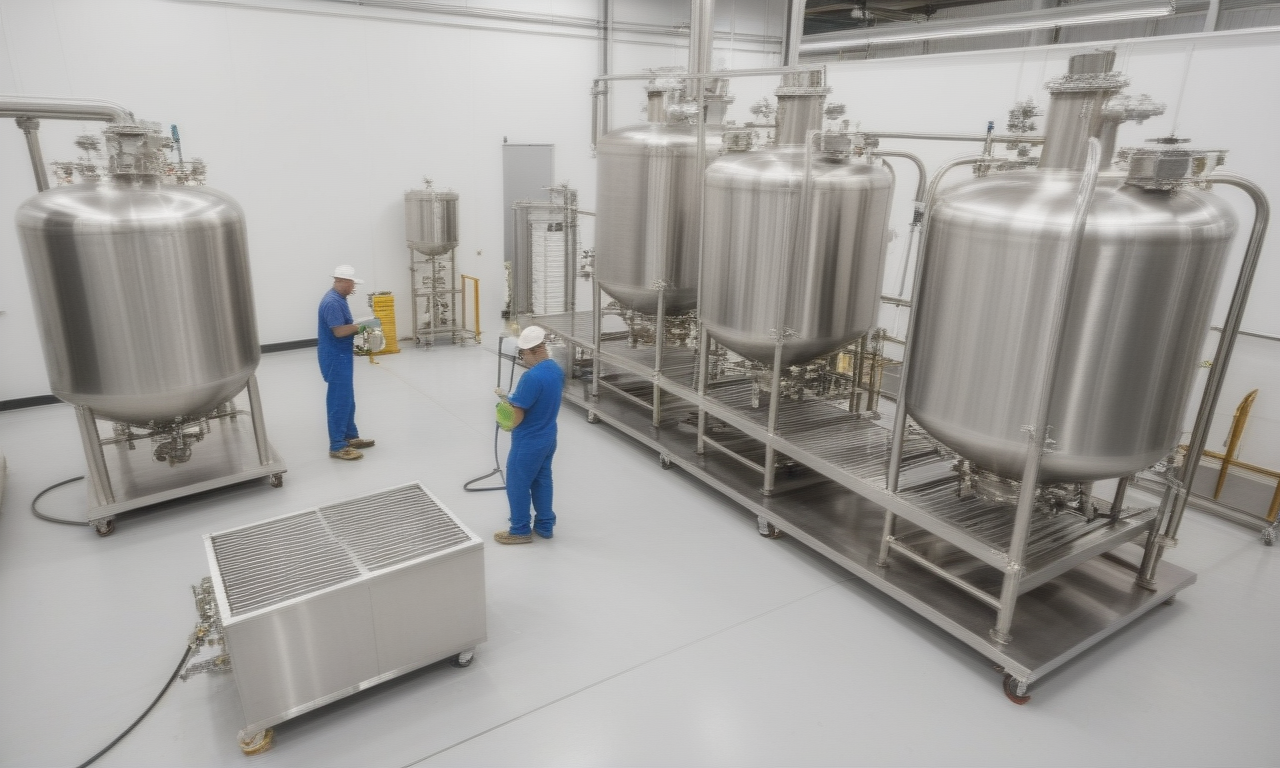
The destination is the parameter buyers most often leave out of the first email, and it is the one that decides the most. Whether the order is a liquid cylinder or a battery of bulk cryogenic storage tanks, the destination country is fixed at specification stage — before any factory is shortlisted.
Step 2. Factory selection: matching the order to a manufacturer
With the duty defined, the order can be matched to a production line. This is where a sourcing model differs from buying factory-direct: instead of asking whether one factory can stretch to your requirements, the question becomes which manufacturer in the network already meets them. Five factors are weighed together — destination country, equipment type, applicable design standard, conformity assessment procedure and the required documentation set. A factory building excellent GB-code tanks for its domestic market is not automatically right for an order that must carry a European or North American conformity route.
The full seven-step process, from inquiry to production release, is described in how Cryofortune selects a manufacturer for each order; the short version is that the manufacturer is chosen by the order’s requirements, not by preference.
Step 3. What to verify before production starts
Certificates and approvals in this industry belong to a specific factory, a specific production site, a specific model and a specific order — never to a brand in general. Before releasing production, the checks that matter are:
- The factory holds a currently valid certification for the design code your destination requires, covering the site where your vessel will actually be built.
- The model and specification that will appear on the certificates match what was quoted — and will match the nameplate.
- The documentation set to be delivered is listed in writing before production, not negotiated after it.
- The conformity route for your destination is confirmed, since testing and certification steps differ market by market.
Cryofortune runs these checks as part of order preparation. Buyers approaching factories directly should run them too — the questions to ask are collected in the guide to vetting cryogenic equipment suppliers in China.
Step 4. Production and inspection
Production of a bulk storage tank commonly runs a few months from drawing approval; liquid cylinders and catalog vaporizers are typically faster. The schedule is set per order and stated in the technical proposal rather than promised generically, because vessel size, code and factory workload all move it.
During fabrication, the recognized hold points are material verification, weld inspection and NDT, pressure testing, vacuum and leak performance, and a final pre-shipment inspection. Buyers can appoint third-party inspectors at origin — SGS, BV, TÜV or their own engineer — best agreed before production starts so witness points sit in the factory schedule. For buyers who do not travel, staged photo and video reporting against the inspection plan is standard practice.
Step 5. The documentation set
A cryogenic vessel is only as importable as its paperwork. A complete delivery includes the manufacturer’s data book — material certificates, weld and NDT records, test reports — plus the conformity documents for your route, the operating manual and the commercial documents for customs. One rule ties the set together: the model and serial number on the certificates must agree with the invoice, the packing list and the physical nameplate.
Which conformity documents apply — ASME data reports, CE marking under PED, EAC or another route — depends entirely on the destination. The export documentation guide for cryogenic tanks covers the major regimes in detail, and the standards overview lists the design codes orders are built against.
Step 6. Shipping: containers, ISO frames and oversize cargo
Nearly all cryogenic equipment leaves China by sea. Liquid cylinders, vaporizers and small horizontal tanks are skidded and secured inside standard containers. Tanks built into ISO frames travel as containers in their own right — the 20 ft cryogenic ISO tank container guide explains that format. Large vertical tanks exceed container dimensions and move as breakbulk or on flat-rack and open-top units, with transport saddles, blanked and sealed nozzles, and the insulation space protected for the voyage. Export clearance on the China side is arranged with the freight forwarder; lashing surveys are routine for oversize vessels.
Step 7. Arrival: customs and registration are importer-side steps
At the destination port the roles switch. The import declaration, duties and taxes, and any statutory registration of the pressure vessel with your national or state authority are carried out by the buyer, the importer of record or their broker and local representative — a foreign supplier cannot file them on your behalf. What the supplier is responsible for is making sure those steps do not stall: the manufacturer documentation that customs and the registration authority rely on must be complete, internally consistent and in your hands before the vessel arrives.
Requirements differ significantly between markets, which is why orders are scoped by destination from day one; the cryogenic equipment by country pages outline what typically applies where.
Step 8. Commissioning support
Commissioning starts long before the tank does: foundation loads and installation drawings are issued during production so civil works run in parallel with fabrication. On site, the sequence is inspection after unloading, purging, controlled cool-down, first fill and verification of relief settings and instrumentation. Support at this stage typically means written procedures, remote engineering support during start-up, and coordination with your local gas supplier or installation contractor; on-site attendance can be discussed per project. Spare parts and warranty matters are handled through the supplier, with the manufacturer of record behind each unit.
What to put in the first inquiry
The fastest path through everything above is a first email that contains the facts the process runs on:
- Medium and working pressure
- Net capacity, and the discharge or vaporization rate you need
- Destination country and, if known, the site conditions
- Any standard or certification requirement already imposed by your authority or client
- Target schedule
From that, Cryofortune returns a technical proposal naming the configuration, the design standard, the documentation plan and the manufacturer basis for the order — send it through the contact page, with drawings or a site photo attached if you have them. Availability and applicability of any standard, certificate, marking or registration procedure is confirmed for the specific manufacturer, model and order before production.