Kenya buys cryogenic equipment the way a regional hub does. Some of it stays — liquid oxygen tanks behind county hospitals, nitrogen and carbon dioxide for the food and flower export chain, welding gases for the fabrication yards — and some of it clears Mombasa only to travel on to Uganda, Tanzania or Rwanda. Either way, the equipment itself almost always starts in China, and for Kenya the paperwork that lets it clear customs must start there too.
Cryofortune Engineer & Supply Co., Ltd. is an international sourcing and engineering supplier. We are not a factory. We work with a network of vetted Chinese manufacturers of cryogenic tanks, vaporizers, liquid cylinders and pressure vessels; we match your specification to the plant that genuinely builds that class of equipment, then manage the order through design review, production, inspection and shipment. Every certificate in the package belongs to a specific manufacturer, a specific model and a specific order — never to a brand — and that is exactly how we present it.
For Kenya there are two regulatory layers to sequence: Pre-Export Verification of Conformity (PVoC) on the import side, and the occupational safety framework administered by DOSHS once the equipment is at work. Neither is difficult if it is planned from the first enquiry. Both are expensive if remembered late.
Equipment We Source for Kenyan Projects
The core scope for industrial gas, healthcare and cold-chain projects in Kenya:
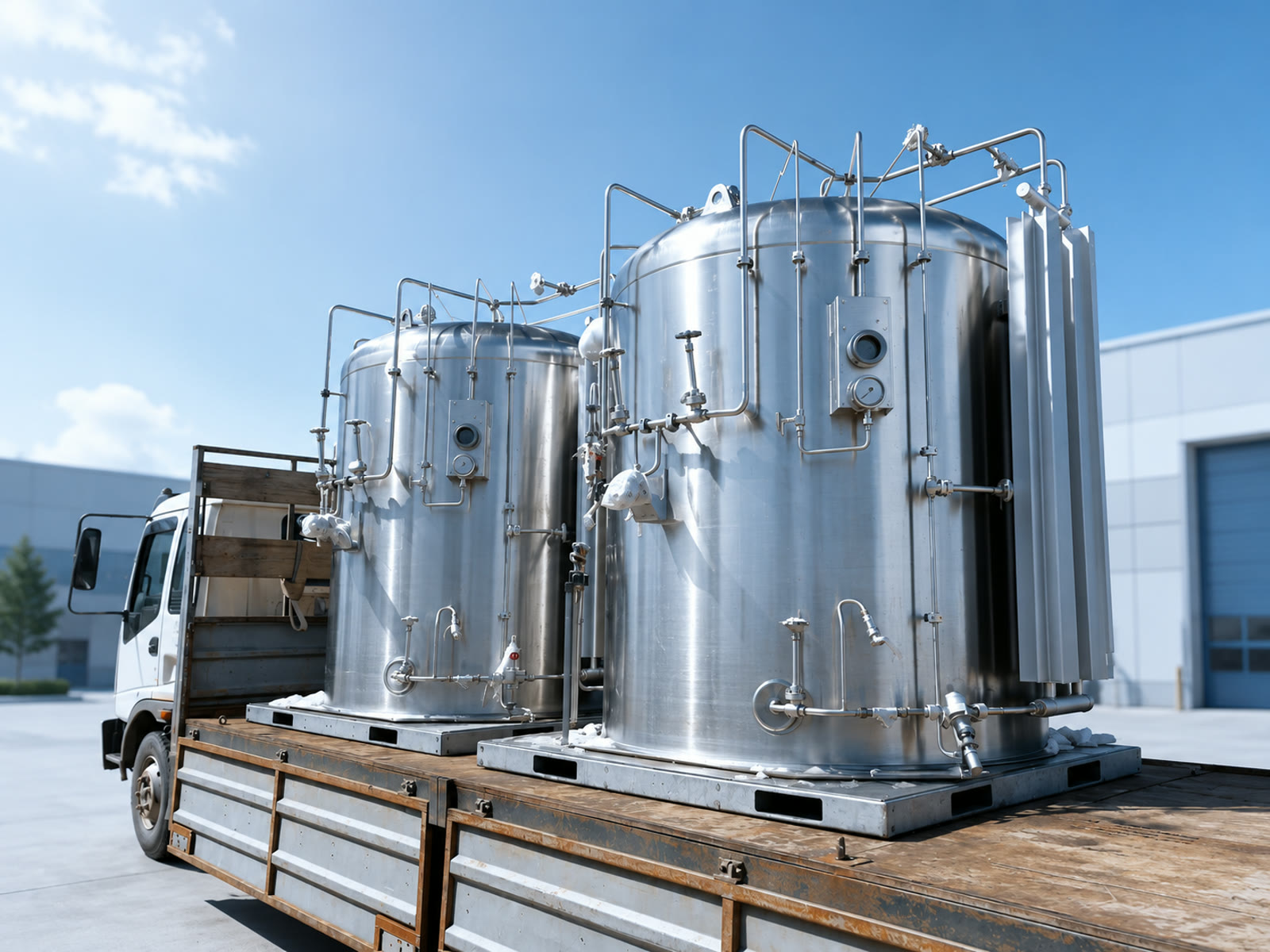
- Cryogenic storage tanks — vacuum-insulated vessels for liquid oxygen, nitrogen, argon, carbon dioxide and LNG, vertical or horizontal, sized and configured to the project rather than to a catalogue page.
- Cryogenic vaporizers — ambient air vaporizers where a passive unit that needs no electricity is the sensible default; steam-heated and electric units where the duty demands them.
- Cryogenic liquid cylinders — self-pressurising dewars for hospitals, laboratories and gas distributors where consumption does not yet justify a fixed tank.
- Pressure vessels — buffer vessels, CO2 storage and other pressure equipment built to the design code agreed for the order.
Capacity, working pressure, insulation and connection layout are fixed in the technical annex of the contract. We do not quote from stock lists; we quote from a specification you can hold the factory to.
PVoC: Kenyan Customs Clearance Is Earned in China
Kenya operates a Pre-Export Verification of Conformity programme for regulated imports. In outline: consignments within its scope require a Certificate of Conformity issued by inspection agents appointed by the Kenya Bureau of Standards (KEBS), and that certificate is issued before shipment, in the country of export. On arrival, the certificate forms part of customs clearance — and arriving without one, where one is required, is the slow and costly way to discover how the programme works.
The practical consequence is sequencing. Verification generally involves document review and, depending on the route, inspection or testing arranged while the goods are still at the factory — so the compliance clock starts in China, not on the quay in Mombasa. A tank that ships before the verification step is complete does not become more compliant during the voyage.
Whether a particular consignment — a storage tank, a vaporizer skid, a batch of dewars — actually falls within PVoC scope is confirmed at order time, not assumed. Scope and procedures are adjusted from time to time, so we align with the buyer and the buyer’s clearing or verification agent on the current position for the specific goods, and build the verification window into the production plan.
The division of labour is clean. The importer or their agent owns the Certificate of Conformity process and the customs formalities in Kenya. We arrange what that process consumes: the manufacturer’s documentation, test evidence and factory access for the appointed verification agent.
Operating Pressure Equipment in Kenya: The DOSHS Layer
Clearing customs is the import layer; operating the equipment is a separate one. Pressure vessels installed in Kenyan workplaces fall under the occupational safety and health framework administered by the Directorate of Occupational Safety and Health Services (DOSHS). In broad terms, statutory examination of pressure vessels by approved persons is expected before the equipment enters service and periodically thereafter, with the duty and the records sitting on the operator’s side.
Exact intervals, forms and registration mechanics depend on the equipment class and the regulations in force at the time — those points are confirmed in Kenya, with DOSHS or the approved person your site engages, not asserted from a supplier’s web page. What we control is what the examiner will ask to see: design data that matches the nameplate, test reports that match the vessel, and a data book that does not leave the approved person guessing.
As on every market page on this site: statutory steps in the destination country are carried out by the buyer, the importer or their local representative. We arrange the manufacturer documentation those steps rest on — we do not perform Kenyan statutory functions, and no offshore supplier can.
Design Codes and the Data Behind the Nameplate
ASME Section VIII is the design code most commonly specified for export-built pressure vessels in projects of this kind, and the manufacturers in our network build to it as routine work; alternative codes can be reviewed against the project’s requirements. The design code, certification scope and inspection regime are fixed per order, in writing, before a plate is cut.
One principle does not bend: certificates belong to the manufacturer, the model and the order. A trading brand cannot hold a pressure-vessel certification on your behalf, and a certificate from one plant says nothing about a vessel welded in another. That is why our quotations name the actual manufacturing plant, and why the document package is assembled around that plant’s certificates for your serial numbers. The mechanics are described in cryogenic equipment export certification.
Where the Equipment Works: Kenya’s Industrial Map
Kenya is the procurement centre of East Africa, and the demand profile shows it:
- Healthcare — the oxygen buildout across county and referral hospitals: bulk liquid oxygen storage, vaporization and cylinder or dewar backup.
- Floriculture and fresh produce — Nairobi is one of the world’s major flower-export hubs, and the export cold chain behind flowers, vegetables and fruit depends on reliable refrigeration and gas supply.
- Food processing — freezing, chilling and packaging applications for nitrogen and carbon dioxide.
- Steel and fabrication — oxygen, argon mixtures and CO2 for cutting and welding across the metal-working sector.
- Manufacturing under Kenya’s economic-zone programmes — new plants bring new industrial gas demand.
Logistics run through the port of Mombasa and onward by rail and road to Nairobi and the interior — and a meaningful share of equipment landed in Kenya is on-shipped to Uganda, Tanzania or Rwanda. Say so at enquiry stage if that is the plan: the final destination sets the documentation target, and a vessel bound for Kampala or Kigali is documented for that market from the start, not re-papered after the fact.
One more Kenyan advantage is unglamorous but real: procurement runs in English. Drawings, data books, test reports and correspondence pass between your engineers and the factory without a translation layer, which removes a whole class of errors before they happen.
How the Manufacturer Is Chosen
Our network is a vetted shortlist, not a directory. For a Kenyan order the filters are concrete: current design-code capability, traceable materials, welding and NDT records, oxygen-cleaning discipline where the service demands it, export packing that survives ocean freight and inland haulage, and — decisive for PVoC — an open door for third-party inspectors. A factory that resists inspection visits cannot serve Kenya, whatever its price. The method is documented in how Cryofortune selects a manufacturer.
Documents That Travel with the Order
The typical documentation scope, agreed line by line per order:
- Design documentation and code certification for the vessel as built;
- Material certificates with welding and NDT records;
- Pressure and leak test reports, and cleaning-for-oxygen-service certificates where applicable;
- Nameplate data consistent with the data book and the serial number;
- The commercial set — invoice, packing list, bill of lading, certificate of origin — prepared with the clearing agent’s requirements in view;
- The manufacturer documentation required for the PVoC verification route agreed for the consignment.
The wider mechanics — Incoterms, freight, insurance, arrival formalities — are covered in importing cryogenic equipment from China.
Start the Kenya Enquiry with Five Facts
Send us the medium (oxygen, nitrogen, argon, CO2 or LNG), the capacity you need, the working pressure, the county and site conditions, and whether the equipment stays in Kenya or moves on to a neighbouring market. That is enough for a first configuration proposal and a document plan sequenced around PVoC — contact us here. Other markets are covered in the country directory.
Availability and applicability of any standard, certificate, marking or registration procedure are confirmed for the specific manufacturer, model and order before production.