Most countries that import pressure equipment run one national inspectorate. Pakistan runs several. Boilers and pressure vessels are a provincial subject: Punjab, Sindh, Khyber Pakhtunkhwa and Balochistan each apply their own Boilers and Pressure Vessels ordinance or act through their own chief inspector of boilers, and which office a cryogenic tank answers to is decided by geography — where the vessel will stand, not where it clears customs. A tank installed outside Faisalabad lives under Punjab’s rules; the same tank at Port Qasim lives under Sindh’s. Suppliers who quote for Pakistan as if it were one jurisdiction are how retrofit paperwork gets invented.
Cryofortune Engineer & Supply Co., Ltd. is an international sourcing and engineering supplier, not a factory. Each Pakistani order is placed with the manufacturer in our vetted Chinese network whose approvals, weld procedures and test capability fit that specification, and we manage engineering, inspection and documentation through to loading. Statutory steps inside Pakistan — registration, examinations, any licensing — are carried out by the buyer, the importer or their local representative. Our part is the manufacturer-side documentation, built so those steps run on paper the inspector can actually use.
Equipment we supply to Pakistan
The working set for gas plants, hospitals and industrial sites:
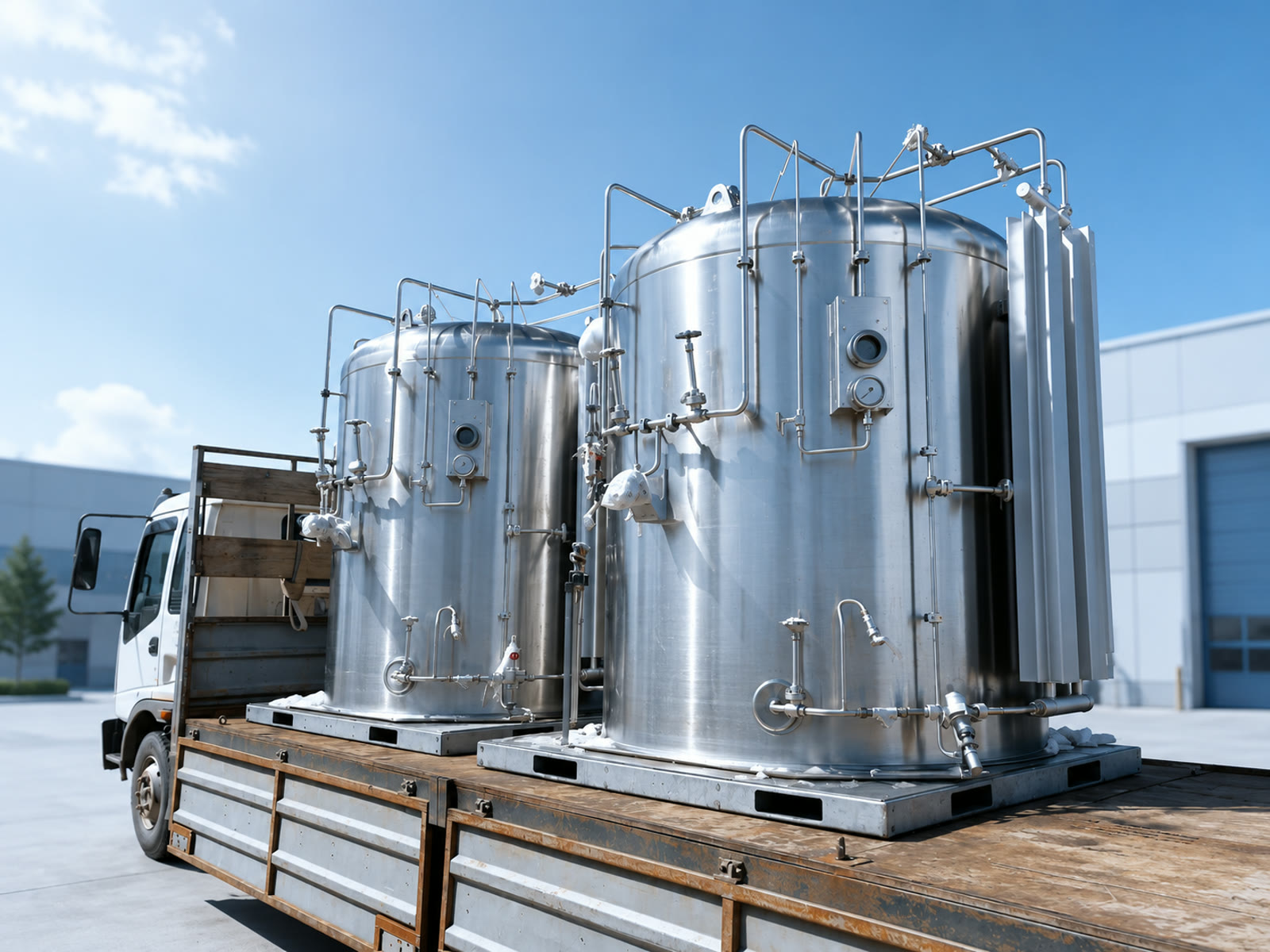
- Cryogenic storage tanks — vertical and horizontal vacuum-insulated vessels for liquid oxygen, nitrogen, argon and carbon dioxide, from hospital-yard units to filling-station storage.
- Cryogenic vaporizers — ambient-air vaporizers matched to the tank and the duty. Pakistan’s long hot season works in their favour; sizing still has to respect winter lows in the north and sustained draw at peak demand, which we treat as a per-order calculation rather than a catalogue line.
- Cryogenic liquid cylinders — palletised dewar-type cylinders for distributors, laboratories and hospitals that draw liquid without a fixed tank.
- Pressure vessels — buffer vessels, air receivers and process vessels that accompany PSA oxygen plants, filling stations and industrial gas systems.
Around the vessels we supply the connecting scope — manifolds, pressure regulation, safety relief assemblies — engineered as one package, so the provincial inspector examines a coherent installation rather than a collection of parts.
The provincial inspectorate layer
Since the subject devolved to the provinces, each province has maintained its own Boilers and Pressure Vessels legislation and its own inspectorate under a chief inspector of boilers. The instruments share a common lineage, so the mechanics look similar everywhere: vessels within scope are registered with the provincial inspectorate, examined before being put into use and examined periodically thereafter, and the owner or user carries duties around safe operation, records and the reporting of incidents. What differs is the detail — scope thresholds, fees, examination practice, and how a particular office reads its own rules in a particular year.
This is why the first question we ask a Pakistani buyer is not capacity but location. Province and city determine the inspectorate, the inspectorate determines the registration path, and the registration path determines what the manufacturer’s file must contain. We hold the provincial specifics deliberately loosely in print: ordinances are amended, practice shifts, and the working requirements are confirmed per order with the buyer’s local consultant or the inspectorate itself. What does not shift is the equipment-side requirement — a data book complete and self-consistent enough for an inspector to verify the vessel without a correspondence chain back to China.
Installations tied to oil and gas infrastructure can additionally sit under separate federal regulators such as OGRA; whether that applies to a given site is established by the buyer’s consultant, not assumed from a webpage.
Design codes and the data book
Imported pressure equipment dominates this market, and ASME Section VIII is the design language Pakistani inspectors and consultants see most and accept most readily. The manufacturers we place these orders with build to ASME as routine work; the exact certification scope held is a per-manufacturer, per-order fact, which is one more reason we name the factory early. In practice the decisive artefact is the data book: material certificates traceable to the actual plates and heads, weld maps with procedure and welder qualifications, NDE records, heat-treatment charts, the hydrostatic test report, nameplate details and as-built drawings. Provincial examination works off documents first and the vessel second; a thin file is the most common reason an imported vessel stalls between the port and first use.
One rule we repeat on every country page because it is the industry’s most abused claim: certificates belong to a specific manufacturer, a specific model and a specific order. No trading company — ourselves included — holds ASME or any other approval on behalf of a brand. We name the manufacturer before you commit, and every certificate in the file carries that manufacturer’s name.
Where the equipment goes
The 2021 medical oxygen emergency left a permanent mark on the hospital sector. When cylinder logistics were strained past their limit, hospitals and provincial health programmes began building on-site supply, and the buildout has continued since: liquid oxygen tanks with vaporizer sets as primary or backup supply at larger hospitals, PSA generation with buffer vessels where liquid delivery is unreliable, and liquid cylinders for smaller clinics. A large share of current tank demand in Pakistan traces back, one way or another, to that year.
Industrial demand is broader than it looks from outside. The textile industry — the country’s largest export manufacturing sector — uses nitrogen for selected processes. The steel re-rolling and fabrication belt around Lahore, Gujranwala and Karachi consumes oxygen for cutting and argon-based mixtures for welding. Food processors freeze and chill with nitrogen and carbon dioxide. And the gas filling companies that serve all of the above buy storage tanks, vaporizers and cylinder infrastructure of their own.
It is a price-sensitive market, and the combination that closes orders is Chinese-built equipment carried by a document file the provincial inspectorate can accept. Price without the file stalls at registration; the file at Western pricing loses the tender. Supplying both at once is, precisely, our product.
Logistics: Karachi in, road onwards
Sea freight enters through Karachi — Karachi Port or Port Qasim — and moves inland by road to Punjab and the north, on corridors that CPEC-era investment has made considerably more predictable. Smaller vessels and cylinder consignments travel containerised; larger tanks go flat rack or breakbulk with saddles, lashing plan and lifting points prepared for it. Customs clearance is the territory of the buyer’s clearing agent; we prepare the commercial and technical document pack the agent works from and answer the queries that come back. The general sequence — inspection, loading, documents, arrival — is described in how to import cryogenic equipment from China.
Which factory builds your order
We keep a network rather than a single plant because Pakistani orders do not describe a single plant’s strengths. A hospital oxygen tank, a filling-station storage vessel and a run of liquid cylinders are different builds with different natural manufacturers. For each order we shortlist from factories we have audited — pressure-vessel approvals in force, weld procedures qualified for the material, a test floor able to run the acceptance tests the order needs — and place the work where the fit is real. The method, including what disqualifies a factory, is set out in how Cryofortune selects a manufacturer. You see the manufacturer’s name before contract, not after.
Documents delivered with a Pakistani order
A typical file: the manufacturer’s data book with design calculations, material certificates, weld and NDE records, test reports and as-built drawings; product certificates as applicable to that manufacturer and model; third-party inspection reports where the buyer appoints an inspector; and the commercial set — invoice, packing list, bill of lading, certificate of origin — the clearing agent needs. What each element is and who issues it is covered in cryogenic equipment export certification. We compile the file before shipment and keep a copy, because provincial registration questions sometimes arrive months after the vessel does.
Scoping an order for Pakistan
Five things let us respond with substance instead of a brochure: the medium — oxygen, nitrogen, argon or carbon dioxide; the capacity you have in mind; the working pressure; the province and city where the vessel will stand; and whether a local inspector-side consultant is already engaged. With those we can shortlist manufacturers, map the documentation route and give a serious delivery picture — send them through the contact page. Neighbouring and comparable markets are covered in cryogenic equipment by country.
Availability and applicability of any standard, certificate, marking or registration procedure are confirmed for the specific manufacturer, model and order before production.