Egypt is one of the busiest industrial markets in North Africa: steel and fertilizer complexes with large-volume gas demand, food factories across the Delta, hospital networks upgrading their oxygen infrastructure, and a Suez Canal corridor that keeps adding plants which consume cryogenic media from the first day of commissioning. Cryogenic tanks, vaporizers and gas equipment for these projects are routinely sourced from China. What separates a smooth Egyptian delivery from an expensive one is sequencing, because in Egypt the customs file opens before the vessel leaves the Chinese port.
Cryofortune Engineer & Supply Co., Ltd. is an international sourcing and engineering supplier, not a factory. We work from a network of vetted Chinese manufacturers, select the right shop for each order, manage design review and inspection, and prepare the manufacturer documentation an Egyptian import depends on, in the order the system expects it. Every certificate in that file belongs to a specific manufacturer, model and order — never to a brand name — which is exactly how customs and inspection bodies read it.
Equipment we supply to Egypt
The equipment set for Egyptian buyers matches what gas distributors and plant owners install worldwide, specified to the medium, capacity and pressure of the project:
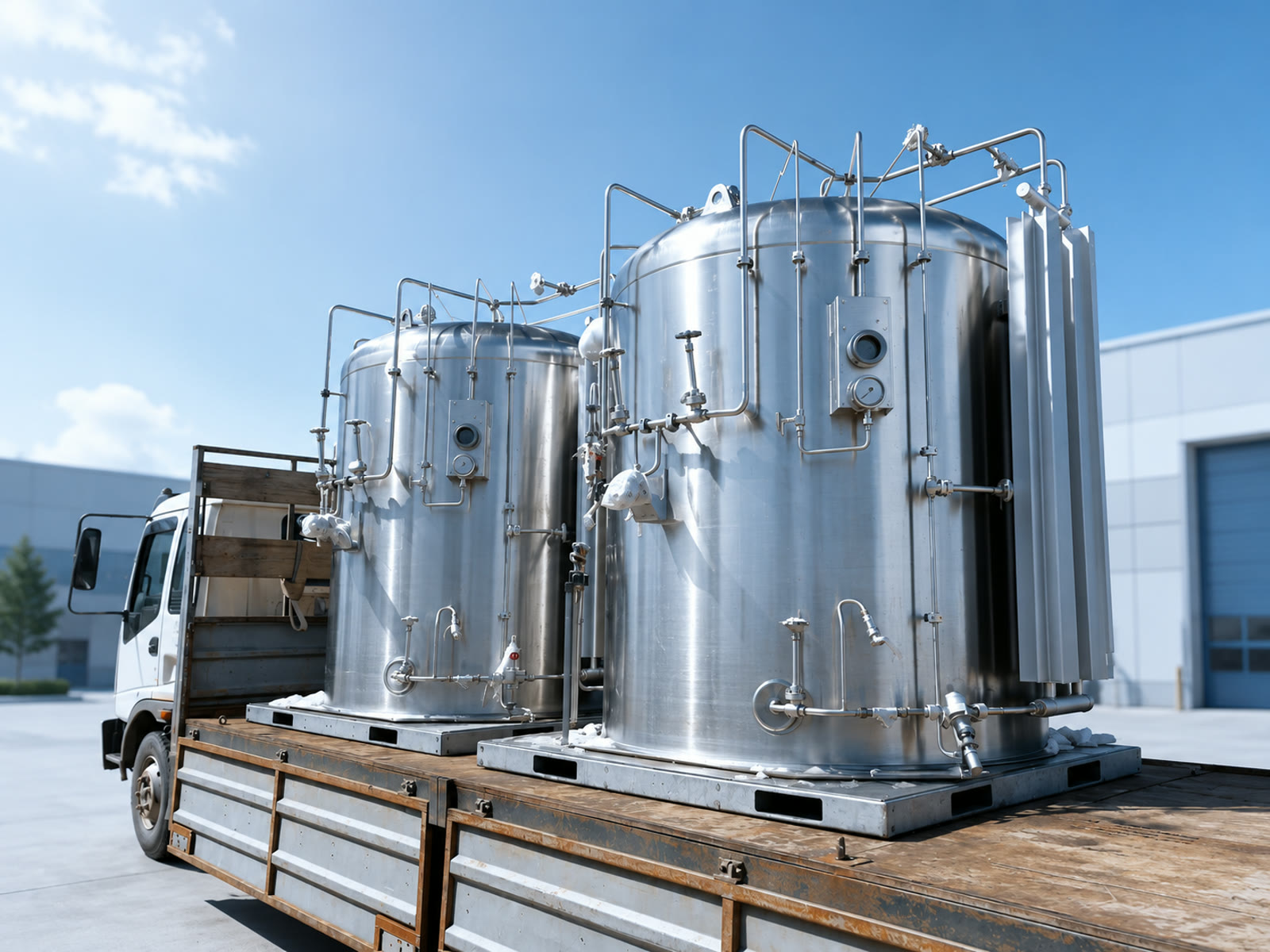
- Cryogenic storage tanks — vacuum-insulated vertical and horizontal tanks for liquid oxygen, nitrogen, argon and carbon dioxide, from distributor depots to on-site hospital and plant storage.
- Cryogenic vaporizers — ambient-air and heated units that turn stored liquid into process-ready gas, sized against the site’s draw profile and climate.
- Cryogenic liquid cylinders — self-pressurizing dewars for distribution rounds, laboratories and customers too small for a fixed tank.
- Pressure vessels — buffer tanks, receivers and custom vessels engineered to the code and specification the project names.
Filling manifolds, skids and interconnecting equipment are quoted alongside the main items where the project calls for them; the configuration is fixed with the buyer before any manufacturer is selected.
Nafeza and ACID: the file opens before the ship sails
Egyptian imports run through Nafeza, the national single-window platform, under the Advance Cargo Information system. In practice this means a shipment must be pre-registered and assigned an ACID number before the vessel sails, not after it arrives. The importer’s side of the registration is initiated in Egypt; on the exporter’s side, shipment data and documents are filed electronically through the CargoX platform against that ACID number. Cargo arriving without a valid ACID registration risks being refused, which turns a documentation delay into a shipping loss.
This is the part of an Egyptian order that punishes improvisation. The commercial documents have to be finalized, internally consistent and filed while the goods are still in China, and details such as importer registration data, classification and the document set need to be agreed with the buyer’s customs broker before the booking rather than at the port. We build the ACID sequence into the production and shipping timeline so that filing is a scheduled step, not a scramble in the last week before departure.
For goods in regulated scope, GOEIC — the General Organization for Export and Import Control — conducts import inspection and control. Whether a specific tank, vaporizer or vessel falls within controlled scope, and what evidence is expected for it, is confirmed with the buyer’s broker at order time rather than assumed. The statutory steps inside Egypt — ACID initiation, the customs declaration, any GOEIC interaction and any registration of the equipment — sit with the importer or their local representative; our role is to arrange the manufacturer documentation and exporter-side filings those steps depend on. The China-side process is described in our guide to importing cryogenic equipment from China.
Design codes: ASME Section VIII first, EN alongside
Egyptian projects most commonly specify ASME Section VIII for pressure vessel construction, a legacy of international oil, gas and EPC practice in the country, while EN codes also appear where European contractors or licensors write the specification. The governing document is the project specification and the end user’s engineering standard rather than a single national rule, so the code question is settled in writing before the order is placed.
Where ASME construction, third-party inspection or a particular certification is required, that capability is confirmed at the level of the individual manufacturer for the specific model and order. Our name appears on the commercial documents; the code compliance, test reports and certificates are issued by and for the manufacturer that actually builds the equipment.
Where Egyptian demand comes from
The Suez Canal Economic Zone is the most visible driver: industrial buildout along the canal corridor keeps adding metallurgical, chemical and manufacturing capacity that consumes oxygen, nitrogen and argon. Steel and fertilizer plants, long-standing pillars of Egyptian heavy industry, anchor large-volume gas demand, while food processing plants use carbon dioxide and nitrogen for freezing, chilling and packaging lines.
Healthcare is its own steady line of work: hospital oxygen systems built around a storage tank, vaporizers and a cylinder reserve. LNG activity is growing as well, around export infrastructure and early small-scale distribution, and it pulls cryogenic storage and regasification equipment with it. The buyers behind these projects are typically gas distributors expanding tank fleets and cylinder pools, plant owners installing on-site storage, and contractors delivering turnkey packages.
Procurement in Egypt runs comfortably in English; contracts, drawings and correspondence rarely need translation. Operator-facing files are a different matter: site teams expect Arabic documentation, so operating instructions and safety content are arranged in Arabic per order, alongside the English originals.
Once installed, pressure equipment in Egypt falls under the labor-law and industrial-safety framework, which places duties on the operating employer for the safe use and periodic examination of boilers and pressure vessels. Who performs those examinations, at what intervals and with what registration formalities is governed by the applicable Egyptian regulations and the operator’s own inspection regime; it is confirmed by the buyer or their local representative rather than assumed from foreign practice. What we control is that the manufacturer’s data book gives those examinations a complete technical basis to work from.
How the manufacturer is selected
We are a sourcing and engineering supplier, and manufacturer selection is the core of what buyers pay us for. For an Egyptian order the shortlist is filtered for design capability under the specified code, welding and non-destructive examination practice, cryogenic testing facilities, and a documented export record — including the ability to produce a clean, consistent document set early enough for the ACID filing sequence. A shop that builds good tanks but cannot support that paperwork timeline is not shortlisted for Egypt, whatever its pricing. The full method, from audits to witness points, is set out in how Cryofortune selects a manufacturer.
The document package for an Egyptian order
A typical manufacturer dossier for cryogenic equipment shipped to Egypt includes general arrangement and detail drawings, design calculations, material certificates, welding and NDE records, pressure and tightness test reports, cleaning records where oxygen service applies, nameplate details and, where ordered, third-party inspection reports. The commercial set — invoice, packing list, certificate of origin and transport documents — is prepared to match the ACID filing exactly, because inconsistencies between filed data and paper documents are what customs queries feed on.
Any attestation or legalization expectations for particular documents are confirmed against current Egyptian practice through the buyer’s broker at order time. What each certificate can and cannot cover, and why none of them attach to a brand rather than a manufacturer, model and order, is explained in our note on export certification for cryogenic equipment.
Request a quotation for Egypt
To price an Egyptian order accurately the first time, tell us the medium (oxygen, nitrogen, argon, carbon dioxide or LNG), the capacity you need, the working pressure, the governorate and site conditions, and whether a customs broker is already engaged. With those points we can shortlist manufacturers, fix the specification and put a realistic production, filing and delivery timeline against it. Send the details through our contact page and an engineer will come back with questions, not a form letter.
Egypt is one market among many we supply; requirements for other destinations are covered in our country-by-country guide.
Availability and applicability of any standard, certificate, marking or registration procedure are confirmed for the specific manufacturer, model and order before production.