Saudi Arabia is the largest economy in the Gulf and one of the region’s most active importers of cryogenic and gas equipment. Gas distributors expand filling capacity in Riyadh, Jeddah and the Dammam industrial corridor; EPC contractors buy storage and vaporization for hospital, food and industrial projects; end users move from cylinder trucking to on-site liquid supply. Most of that hardware is imported, and a growing share of it ships from China.
This page is the Saudi breakout from our regional guide, Cryogenic Equipment for the Middle East. The regional page covers what the Gulf markets share: the ASME design basis, engineering for high ambient temperature, the logic of conformity settled before the ship sails. Here we focus on what changes at the Saudi border — the SASO conformity framework and the SABER platform — and on where Saudi demand is heading under Vision 2030.
One point of positioning first, because in Saudi Arabia it is not a formality. Cryofortune Engineer & Supply Co., Ltd. is an international sourcing and engineering supplier, not a factory. Orders are placed with vetted Chinese manufacturers selected from our network for the specific product and code requirement, and every certificate in the file belongs to a specific manufacturer, model and order — never to a brand name. The Saudi conformity system is built around exactly that logic: a certificate tied to a defined product, an importer and a shipment. A supplier who is honest about who manufactures what fits that system; a trading brand that blurs it does not.
Equipment supplied to Saudi Arabia
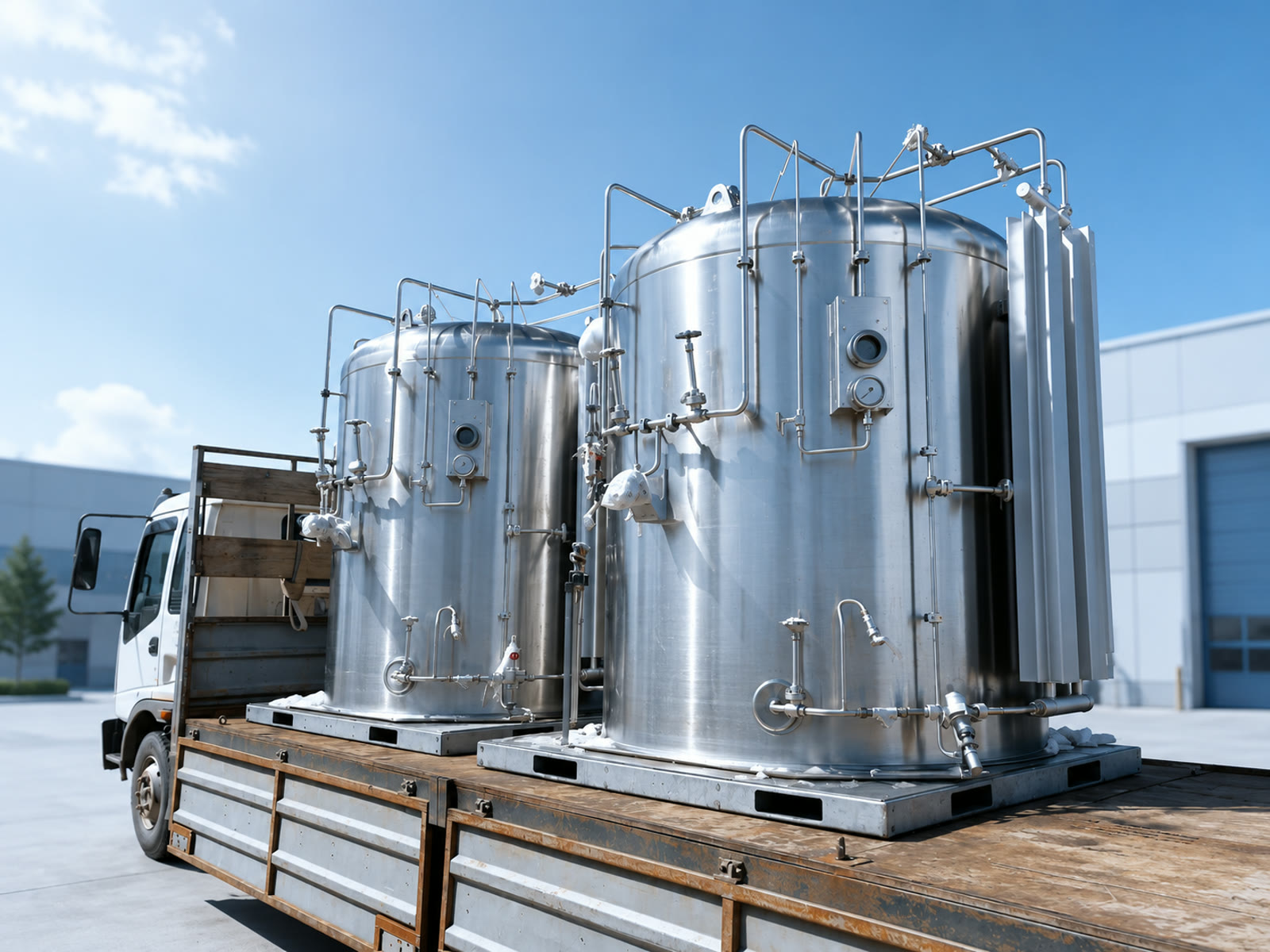
The Saudi order book looks like the wider Gulf list, weighted toward oxygen, nitrogen, argon and carbon dioxide service:
- Cryogenic storage tanks — vertical and horizontal vacuum-insulated tanks for LOX, LIN, LAr and LCO2 at distributor fill plants, hospitals, food plants and industrial sites.
- Cryogenic vaporizers — ambient air vaporizers carry the main duty in the Saudi climate, with water-bath or electric units where a project specification calls for them.
- Cryogenic liquid cylinders — palletized dewar-type cylinders for customers below bulk-tank scale: laser job shops, laboratories, clinics and smaller processors.
- Pressure vessels — buffer vessels and other pressure equipment supporting filling stations and gas systems.
- Supporting scope confirmed per project — filling pumps, manifolds, gas management panels and interconnecting skids.
Saudi ambient conditions cut both ways. High air temperature is an asset for ambient vaporizers, which take their heat from the surrounding air. The same heat raises tank pressure faster during holding and filling, which makes relief arrangements, pressure-building settings and summer filling practice points to review rather than assume. Vaporizer sizing and relief configuration are checked against the site’s conditions as part of the order engineering, not taken from a catalogue page written for a temperate climate.
SASO, SABER and clearing Saudi customs
Imports of regulated products into Saudi Arabia run through the conformity framework of SASO, the Saudi Standards, Metrology and Quality Organization, administered through the SABER electronic platform. For products in regulated scope, the importer registers the product in SABER, a product certificate of conformity (PCoC) is issued through a SASO-approved certification body, and each shipment then receives its shipment certificate of conformity (SCoC) — both in place before customs clearance. For goods in scope, clearance waits on the certificates.
Which technical regulation covers a given item of cryogenic or gas equipment — and whether a specific tank, vaporizer or cylinder sits inside SABER-regulated scope at all, or is handled as non-regulated with a self-declaration — is not something to assume from a previous shipment. Scope lists and technical regulations evolve, and classification can turn on details of the product and its customs tariff position. We treat this strictly as an order-time question, confirmed with the buyer’s customs broker and the chosen certification body before production starts, not after the goods are on the water.
The division of roles is fixed early. SABER registration and the certificates issued through it belong to the Saudi importer: that statutory side sits with the buyer or their local representative. Our side is the manufacturer file — technical documentation, test reports and factory access for any assessment or inspection the certification body requires — arranged with the manufacturer as part of the order.
Design codes: ASME Section VIII first, project specifications above it
The dominant design basis for pressure equipment in Saudi Arabia is ASME Section VIII. Saudi buyers, their inspectors and their insurers generally expect ASME design for cryogenic tanks and pressure vessels; whether a given order requires code stamping and authorized inspection, and at what level, follows from the buyer’s specification and the intended service and is fixed in the contract per order. Manufacturers in our network are selected for the code capability the order actually requires, which is one reason the factory is chosen after the requirement is defined, not before.
On large projects the code is the floor, not the whole requirement. Saudi Aramco and the major EPC contractors maintain their own engineering specifications, and equipment bought for those projects is quoted against the project specification — materials, instrumentation, coatings, documentation format and inspection hold points included. We do not guess at those requirements. The buyer supplies the applicable specification sheets, and manufacturer selection, quotation and the inspection plan follow them.
Vision 2030: where Saudi gas demand is growing
Saudi demand for gas equipment is no longer an oil-and-gas story alone. Vision 2030 policy pushes industrial diversification, manufacturing localization and giga-project construction — NEOM and the other new developments among them — and each strand pulls gas infrastructure behind it:
- Manufacturing and fabrication — welding and cutting gases for new factories and yards: argon, mixtures, oxygen and nitrogen for laser and plasma cutting, with storage and vaporization to match.
- Food and beverage — a growing processing sector using carbon dioxide and nitrogen for chilling, freezing and packaging.
- Healthcare — hospital construction and expansion drive medical oxygen storage, backup capacity and cylinder-to-bulk conversions.
- Water and utilities — treatment and utility operations that consume cryogenic media as they scale with the new developments.
The practical consequence is steady import activity. Saudi gas distributors add tanks and vaporizer banks at fill plants, EPC contractors buy equipment packages against project specifications, and both source actively from China when the manufacturer and the document file stand up to scrutiny.
Which factory builds a Saudi order
Behind one Saudi enquiry stand several candidate manufacturers. Selection follows the method described in how Cryofortune selects a manufacturer: the product type and size, the design-code capability the order requires, the factory’s documented export record — including Gulf destinations — and the quality of its documentation practice, all weighed before the order is placed. Two Saudi orders for different equipment may be built by two different factories. What stays constant is the engineering counterpart the buyer deals with and the standard of the file that travels with the goods.
This is also where our positioning protects the buyer. Because we are a sourcing and engineering supplier rather than a factory, certificates are never generic and never “ours”: each one names its manufacturer, applies to a model and serial, and is issued for an order. That is precisely the form Saudi conformity work expects to see.
The document file for a Saudi shipment
A Saudi file is assembled per order, not from a template. Depending on the equipment and the contract, it typically spans the manufacturer’s design documentation, material traceability, test and inspection reports, data books for pressure equipment, and the commercial and shipping set the broker needs for clearance — all built against the conformity route agreed with the certification body. The general framework we work to is described in cryogenic equipment export certification.
Arabic-language documentation is expected for some parts of a Saudi file — markings, safety information or specific documents, depending on the product and the applicable regulation. Where the Saudi side of the order requires Arabic content, it is identified early with the buyer’s broker or certification body and arranged per order, rather than discovered at the port.
Anything statutory inside the Kingdom — importer registrations, platform accounts, site permits, local approvals — remains with the buyer or their local representative. We keep the manufacturer side of the file complete enough that the local side has what it needs.
Start a Saudi enquiry
To scope a Saudi order, send five things: the medium (oxygen, nitrogen, argon, CO2 or another gas), the capacity, the working pressure, the city or site, and whether a certification body is already engaged for SABER. We return a proposed configuration, the candidate manufacturer profile and a document plan for the Saudi route. Start through the contact page.
For the regional context around the Kingdom, the Middle East guide linked above covers the Gulf as a whole; other destinations are collected under cryogenic equipment by country.
Availability and applicability of any standard, certificate, marking or registration procedure are confirmed for the specific manufacturer, model and order before production.