
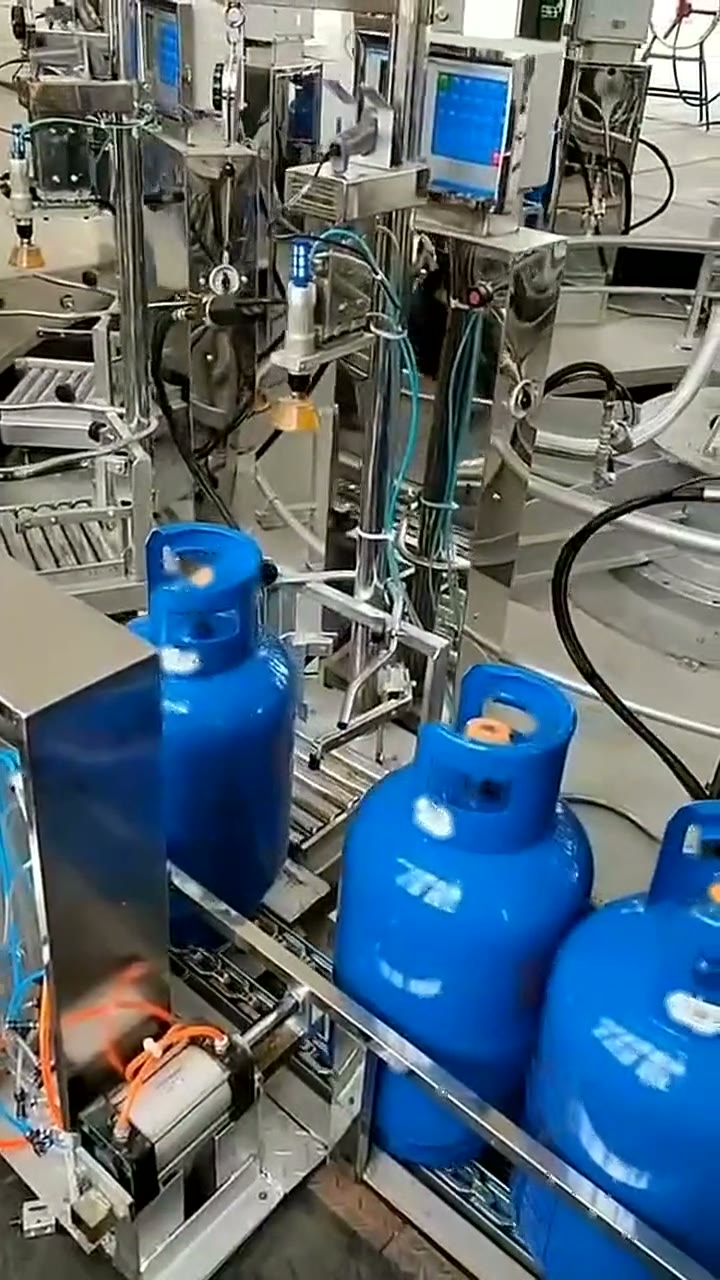
An LPG filling post fills each cylinder by weight. The cylinder stands on an electronic scale, the controller tares it, and a cut-off valve closes the line when the set mass is reached. With an optional cylinder scanner and registry, the same post can also refuse a cylinder before filling starts. Cryofortune sources this filling-post equipment through its network of manufacturers in China and matches the model to your market, as part of its gas filling systems range. LPG storage, pumps, piping and station design stay with you and your engineer.
Send your filling duty or jump to the 10 checks before you order.
What the filling-post equipment does
A filling post is where a cylinder is connected, filled and released. The equipment at the post:
- Electronic filling scale. A weighing platform and a controller that holds preset cylinder data and target masses, tares the filling head and the cylinder automatically, and saves a record of every fill.
- Automatic cut-off. A solenoid-operated valve in the filling line closes at the target mass, so the stop does not depend on the operator’s reaction time.
- Filling gun and hoses. The gun connects to the cylinder valve; flexible hoses link the gun, the scale and the station’s liquid line. The gun is specified per project to match your cylinder valves.
- Cylinder identification (option). A scanner reads a durable tag on the cylinder and checks it against a cylinder registry before the fill is allowed.
- Data module. Sends fill records over 4G cellular or the station’s Wi-Fi.
The clips on this page show a carousel filling line, where every station on the carousel is its own filling scale. The stand-alone filling post described here works on the same weighing principle at a fixed position. We do not supply carousel lines, conveyors or cylinder handling; our scope is the filling-post equipment.
How interlocked filling works
- Identify. Where a scanner is fitted, the operator scans the cylinder’s tag and the controller looks the cylinder up in the registry.
- Check. Configurable rules refuse the fill if the cylinder is not in the registry, carries no readable tag, is on a blacklist, is past its periodic inspection date or belongs to another owner. Without a scanner and registry these checks do not run, and the post fills by mass only.
- Tare. The scale takes the weight of the empty filling head and of the cylinder as it arrives, so the target applies to the right quantity for the chosen mode.
- Fill and cut off. The valve opens, and when the scale reaches the target the controller closes it automatically.
- Record. The fill is saved with the cylinder, the start and end time and the masses before and after filling, and is transmitted where a data module is connected.
The controller offers three filling modes, as declared by the manufacturer:
- Gross mode. Cylinder, residual gas and new fill together reach the set mass.
- Net mode. The quantity dispensed reaches the set mass, whatever the residual.
- Standard-dose mode. The fill follows a preset standard dose for the cylinder type.
The scale enforces the target you set; it does not decide what the target should be. The permitted fill of each cylinder follows from its water capacity, your LPG mixture and the filling rules of your market, and it is set by your station. In mainland China, cylinder filling must also comply with special-equipment safety rules such as TSG 23-2021, the Gas Cylinder Safety Technical Regulation.
Typical specification
The figures below are declared by the manufacturer for one offered configuration. They are confirmed per model and order.
- Weighing range: 2 to 180 kg, with a 100 g division.
- Accuracy class: III, as declared by the manufacturer. Approval for trade use in your market is a separate step, confirmed per model and order.
- Line pressure: up to 1.6 MPa.
- Power supply: 220 V AC, 50/60 Hz.
- Weighing platform: about 490 × 490 mm, with multi-level protection of the load cell.
- Controller: large LCD display with an English-language interface.
- Data: 4G cellular module, or Wi-Fi through the station’s router; a shared data collector for a filling hall is an option. LTE support and frequency bands for your country, and where the data are stored, are confirmed per order.
- Explosion protection: certification and its scheme are confirmed per model, market and order. See Ex certification for LPG filling equipment.
Scope of supply per filling post
A typical configuration comprises, per post:
- controller with display and accessories;
- 4G or Wi-Fi data module;
- solenoid cut-off valve;
- stand with a filling-gun holder;
- power supply unit with its cable to the controller;
- weighing platform;
- flexible hoses to the filling gun and to the station’s liquid line;
- mounting accessories.
The filling gun and the cylinder scanner are not part of the typical configuration. Both are specified per project: the gun to match your cylinder valves and line pressure, the scanner to match the tags your cylinders carry or will carry. Durable cylinder tags, a shared data collector and a software licence for the cylinder registry are further options.
10 checks before you order
Answering these ten questions before the inquiry removes most of the back-and-forth, and several of them decide whether a given model can be offered at all.
- LPG composition and maximum ambient temperature. The propane and butane mix and the hottest conditions at your site set the permitted fill of each cylinder under your rules, and the temperature range the equipment must be rated for.
- Cylinder sizes and the smallest dose. List every cylinder type with its tare and fill mass. The declared range is 2 to 180 kg with a 100 g division, so for small cylinders check that this resolution is fine enough for your filling tolerance.
- Hazardous-area classification of the filling post. Your engineer classifies the zone, and the zone sets the equipment category or protection level (EPL) that the scale, valve, scanner and data module need.
- Destination market and certification scheme. ATEX in the EU, EAC certification under TR CU 012/2011 in the EAEU, CCC in mainland China, safety registration with the TS mark in Taiwan, or IECEx where your authority accepts it. The scheme is confirmed per model, market and order; the Ex certification comparison explains the differences.
- Trade use. If the filled mass is used to sell LPG, the scale may need legal-metrology approval or verification in your market, in addition to explosion protection.
- Mains supply. Voltage, frequency and earthing at the post. The declared supply is 220 V, 50/60 Hz; anything else is confirmed per model.
- Number of posts and layout. How many scales you need, whether they stand alone or form a line, and the stand height needed for your tallest cylinder.
- Filling gun and cylinder valves. The valve type and connection on your cylinders, and the pressure rating the hoses and valve need for your filling line.
- Cylinder identification. Whether you need the interlock at all; if you do, which tags your cylinders carry or will carry, and who keeps the cylinder registry up to date.
- Data storage. Where fill records should end up (on site, on your own server or on a hosted platform), which connection the post has (4G coverage and bands, or Wi-Fi), and who may see the data.
Standards, markings and the documents that travel with exported equipment are outlined on the standards hub.
What we do not supply
- LPG storage vessels;
- pumps and compressors that move LPG to the filling posts;
- station piping;
- station design and layout;
- carousel filling lines, conveyors and cylinder handling.
Hazardous-area classification, permits and approval of the station remain with the operator and its local engineer. We work from the zone and the rules your engineer gives us, and we confirm which certificates exist for the exact model and configuration before you order.
How an inquiry works
- Describe the duty. Send your answers to the ten checks, even rough ones, and the destination country.
- Configuration. We match a manufacturer and model to your market and confirm the configuration: scale, cut-off valve, gun, scanner and data module.
- Documents check. We confirm which certificates and approvals exist for that exact configuration under your market’s scheme, and say plainly what is missing.
- Proposal. You receive a configuration proposal. Configuration and documentation are confirmed for the specific manufacturer, model and order before production.
How factories are chosen for each market is described in how Cryofortune selects a manufacturer.
Common questions
Is the LPG filling scale ATEX certified?
Not as a blanket statement. Explosion-protection certification belongs to a specific model and configuration, and its scheme (ATEX, IECEx, EAC under TR CU 012/2011, CCC in mainland China or registration in Taiwan) is confirmed per model, market and order before you order. Hazardous-area classification and station approval stay with your engineer.
Does the scale stop the fill automatically?
Yes. The controller closes the cut-off valve when the scale reaches the target mass, in gross, net or standard-dose mode as declared by the manufacturer. The target itself is set by your station from the cylinder’s permitted fill under your market’s rules.
Can the filling post refuse to fill a cylinder?
Only with cylinder identification. With the optional scanner and a cylinder registry, rules can refuse cylinders that are unregistered, untagged, blacklisted, overdue for inspection or owned by another company. Without them, the post fills by mass only.
Are the filling gun and the cylinder scanner included?
Not in the typical configuration. Both are specified per project: the gun to match your cylinder valves and line pressure, the scanner to match the tags your cylinders carry or will carry.
Can the filled mass be used for invoicing?
Accuracy class III with a 100 g division is declared by the manufacturer. Using the scale for trade needs legal-metrology approval or verification in your market, which is confirmed per model and order.
Where do the filling records go?
The controller saves each fill, and records can be sent over 4G or the station’s Wi-Fi. Where the data are stored, and whether they can go to your own server, is confirmed per order.
Do you supply the whole LPG filling station?
No. We supply the filling-post equipment. LPG storage, pumps and compressors, station piping and station design are outside our scope, and permits stay with the operator and its local engineer.
Send your filling duty
Tell us the destination country, the zone your engineer has set for the filling post, your cylinder sizes and how many posts you need. We will come back with a configuration matched to your market and a plain statement of which documents exist for it. Send an inquiry.